
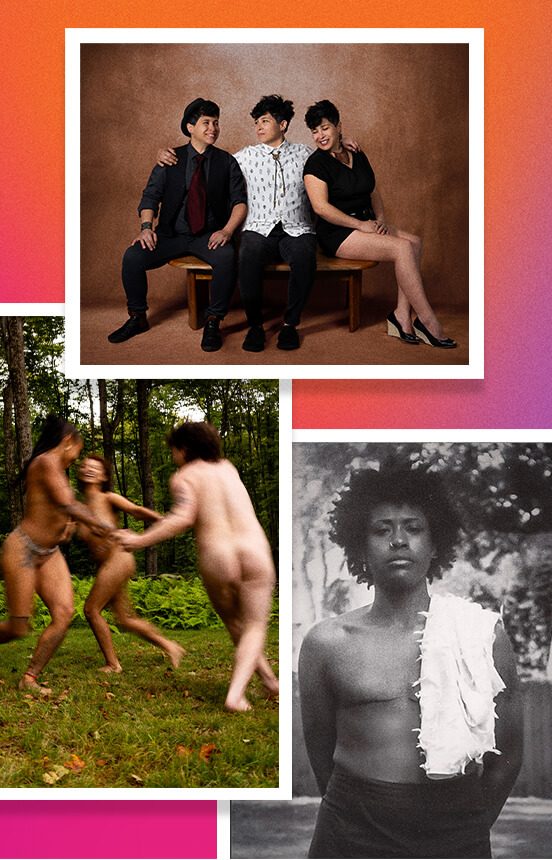
Multidisciplinary artist, photographer, and Curve’s communications manager Sunny Leerasanthanah,
unveils the winners of this year’s Curve Photo Contest.
The original Curve Photo Contest, which ran from 1995-2006 in Curve magazine, initially named the Lesbian Life Photo Contest, delivered what it promised: it documented lesbian life by lesbians, for lesbians. Of course, this was the magazine’s founding impetus, but the contest brought this point home. With thousands of entries received through the mail, the annual contest proved that there was a desire, a hunger, to not only share the lived queer experience, but to be seen and felt. This sentiment is well and alive in the 2026 Curve Photo Contest.
The term “contest” is perhaps misleading, as it is about much more. What is remarkable is its positioning of photography as archival practice, and archival practice as activism. There is mutual understanding, from the people who submit, and from Curve, that each image entered adds to a lexicon of queer expression and representation. This is true of today’s contest (all are preserved and displayed in Curve’s digital archive), as it was true for the original contest. The significance of the original Photo Contest cannot be overstated, when, at the time, images of lesbian and queer life still often had to be mined to be found. As noted by Catherine Lord in The Anthropologist’s Shadow: The Closet, the Warehouse, the Lesbian as Artifact: “‘Lesbian’ was not a category in the filing system.”
The opportunity to have these images, taken by people from all walks of life, be published and shown with great reverence, was special. The range was expansive: candid and staged, amateur and professional, experimental and traditional, intimate portraits with lovers and crowd gatherings at marches. Curve received it all. While we have fundamentally different access to queer visual culture today, the drive to build a shared archive through image-making persists. This is perhaps, as Ann Cvetkovich writes in Photographing Objects as Queer Archival Practice, because “[queers] are not the subject of official histories [they] have to make it themselves by saving materials that might be seen as marginal.”
This year, the Curve Photo Contest hit a record-breaking amount of submissions since its relaunch in 2023. A total of over 430 entries were collected. One thing that may have contributed to the surge in interest is Curve’s social media callbacks to the original photo contest. As someone who has spent hours looking at the original entries of the photo contest, the emotional experience of connecting with the images and the stories they carry can’t be ignored. It is at the heart of what makes the contest so alive and so present today. It is what connects the images submitted today, with works from decades earlier, from photographers like our guest judge, Phyllis Christopher.
“It is so encouraging to see the younger generations keeping on with it. We need you
all…keep going. Keep documenting lesbian, trans, and queer realities.”
— Photographer Phyllis Christopher, 2026 Guest Judge
ABOUT THE CURVE PHOTO CONTEST
The judging criteria for this year’s contest is Creativity, Self-Expression, and Representation. We invited community members who self-identify as lesbian, bi, trans, and queer women and nonbinary people to participate. We asked that images are produced in the last 5 years, and must represent, express, or depict queer life or queer identity.
Thanks to the free and digital Curve Archive, you can flip through the 11 issues of Curve magazine that had the original Lesbian Life Photo Contest here . You can also read archivist Julia Rosenzweig’s reflection on the history of Curve’s contests. Discover the 2025 Curve Photo Contest winners here.
To view all of this year’s submissions, visit the digital exhibit in our Curve Archive.
ABOUT THE JURY
This year’s jury included the Curve staff, the Curve Journalism Fellows, and special guest judges: photographer Phyllis Christopher (whose images were in Curve magazine), Tina V. Aguirre, Director of the Castro LGBTQ Cultural District in San Francisco, and Caro De Robertis, author and professor. Aguirre and De Robertis are also co-curators of the current Yerba Buena Center for the Arts exhibit, Conjuring Power: Roots & Futures of Queer & Trans Movements, for which The Curve Foundation will be organizing a public program.
The Winners
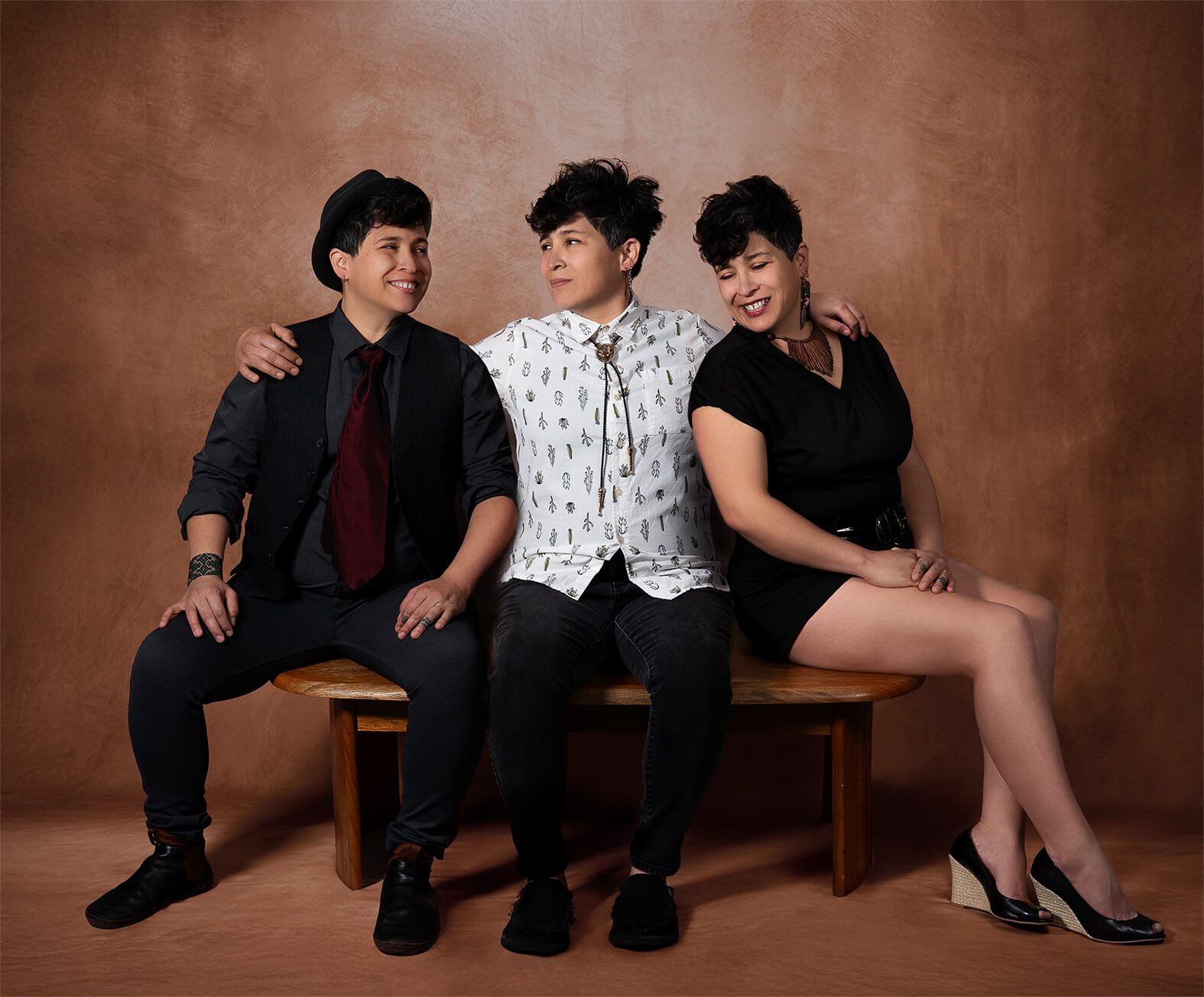
TRUE TO FORM (2026)
Sophie Spinelle-Identifies as: Queer Femme (she/her)
“This is what being gender fluid means to me. This image was co-created with Felicia Figueroa-Carnine. Felicia appears in three interconnected forms.
My queer experience is only one of many, and my goal as a photographer is to understand and share lives beyond my own. I loved collaborating with Felicia. For Felicia, gender has never been singular or fixed, but fluid—shifting over time, moving between and beyond masculine and feminine. This image honors the harmony of those expressions, each one true and essential.”
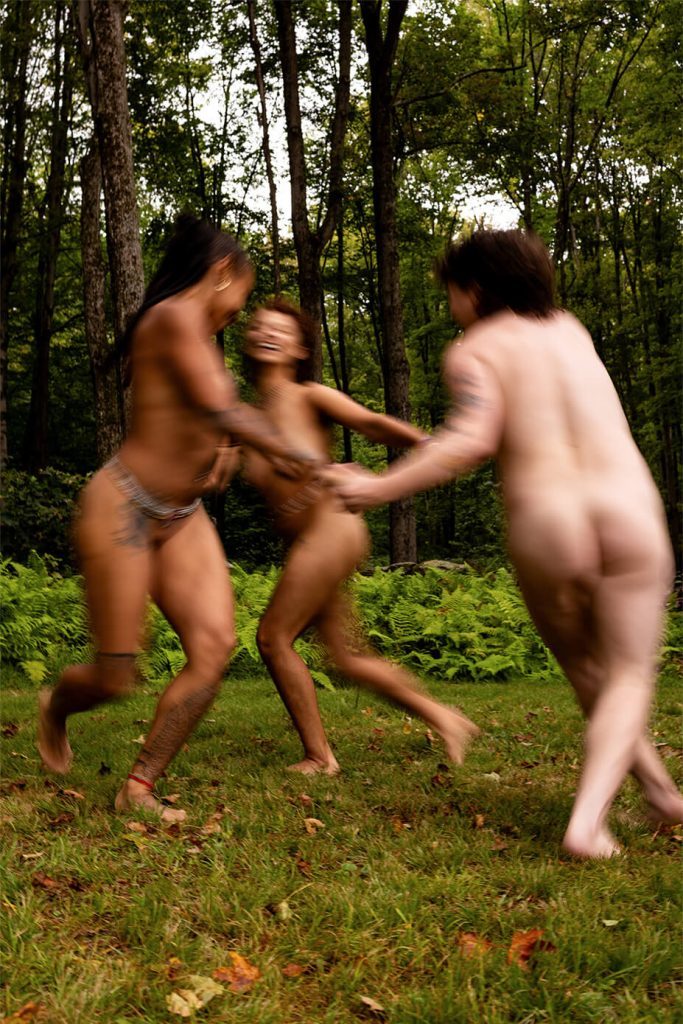
ABUNDANCE (2025) FROM THE SERIES DYKE CAMP
Kade Joy-Identifies as: Nonbinary Lesbian/Dyke (they/he)
In early September of 2025, a group gathered for what would become the first annual Dyke Camp. This photo is one in a series where many of us went to the woods and danced naked. Naked behind the camera, I collaborated with my fellow campers in shared vulnerability, respect, and celebration. This was a space where we could be free from judgment and disconnect from a world that does not always understand the multitudes of the dyke body.
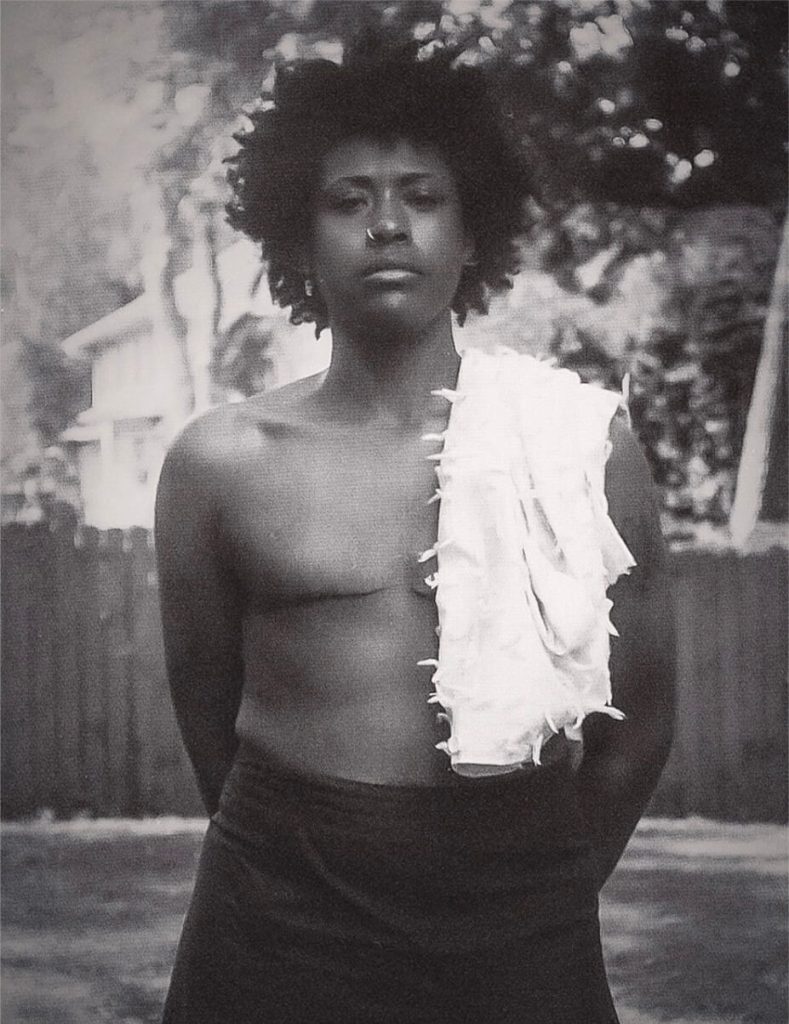
WITH HONOR AND PRIDE (2024)
imoutta (Tyler Wilson)-Identifies as: Lesbian (she/her)
This photo is from my “Tears Glow Blue On Black” series, which is my way of witnessing Black life in the South as something sacred, layered, and alive with memory. I photograph Black people not just as individuals, but as vessels of place carrying generations of love, grief, faith, and survival in their bodies. I focus less on explanation and more on feeling, allowing history to surface through posture, gaze, and stillness. What once was is never truly gone, it lives on in how we hold ourselves, how we mourn, and how we love.
Honorable Mentions
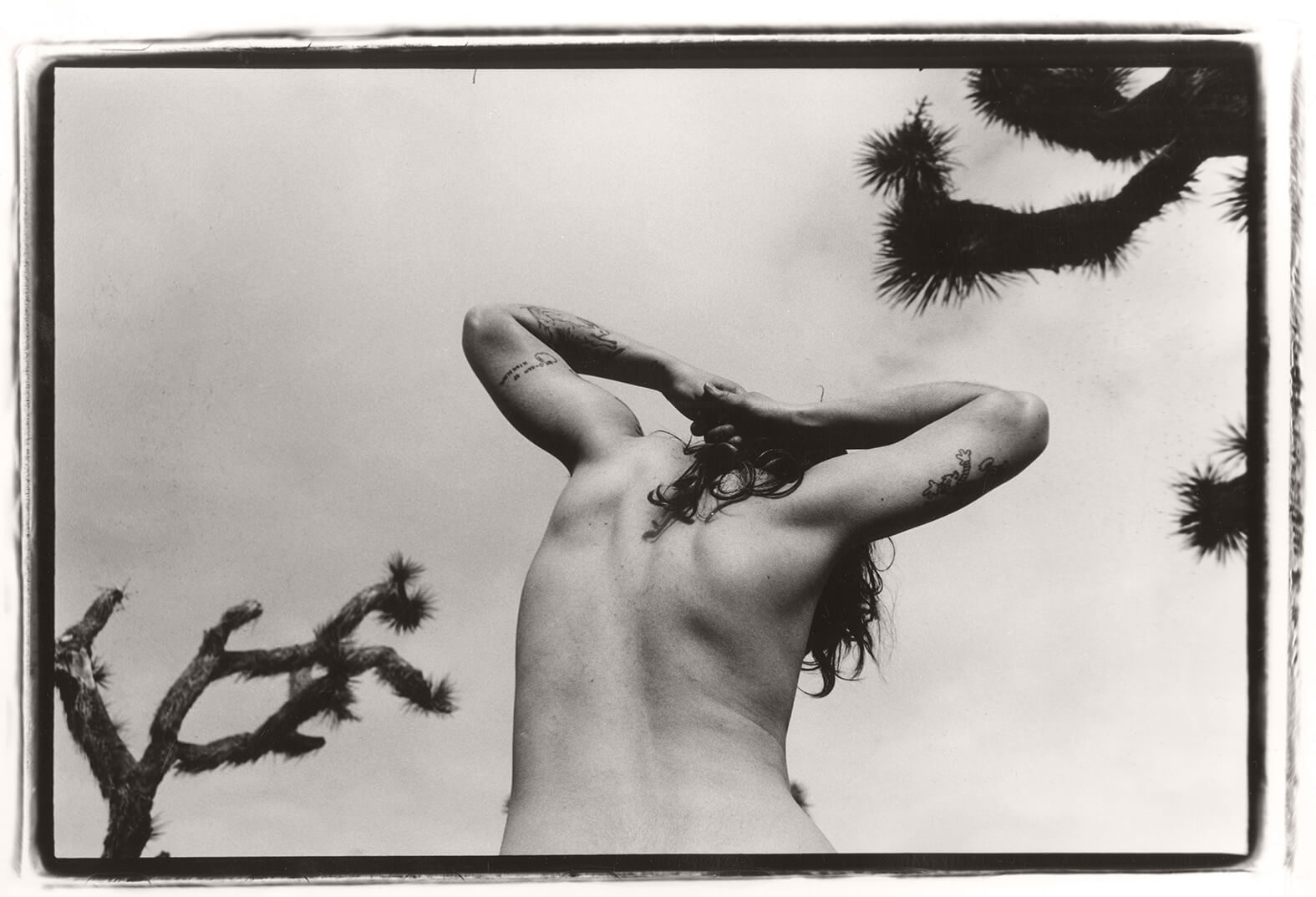
IN THE TREES (2024)
Mattie Provost-Identifies as: Non-binary, Butch Asian Lesbian (they/them)
A critical aspect of this work was to investigate portrayals of masculinity through the symbolism of nature—asking how non-normative identities can be visualized, insofar as our queer futures become not just imagined, but seen, felt, and held. I look to the wilderness, a space to reclaim a westernized, American ‘Manifest Destiny’ of masculinity, and refuse its tropes that ask us to dominate or conquer, by living in symbiosis with the land. These images envision queer utopias—resisting simplifications of gender and sexuality to cultivate expansive, liberatory landscapes.
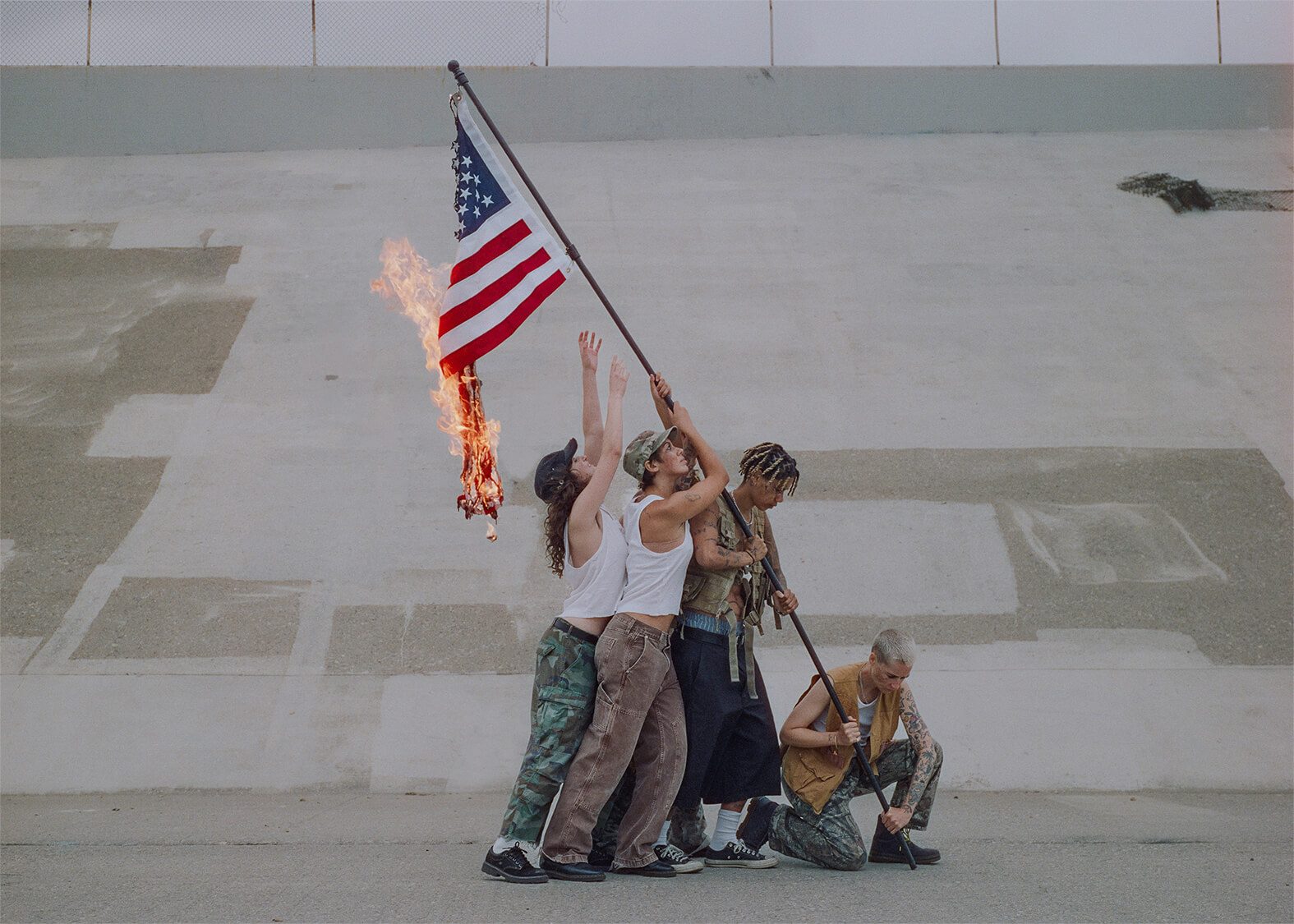
RAISING THE F(L)AG
Smiles Meyer-Identifies as: Queer, Trans Masc Creative Freak (they/them)
Raising the F(l)ag (2025) is a provocative reimagining of the historical image of Raising the Flag On Iwo Jima (1945), and presents queer and trans models raising an American flag engulfed in flames. The image serves as an act of resilience and rebellion against the onslaught of anti-trans legislation and rhetoric enacted by the Trump 2025 administration. Photos captured on Medium Format Film at the Los Angeles River.
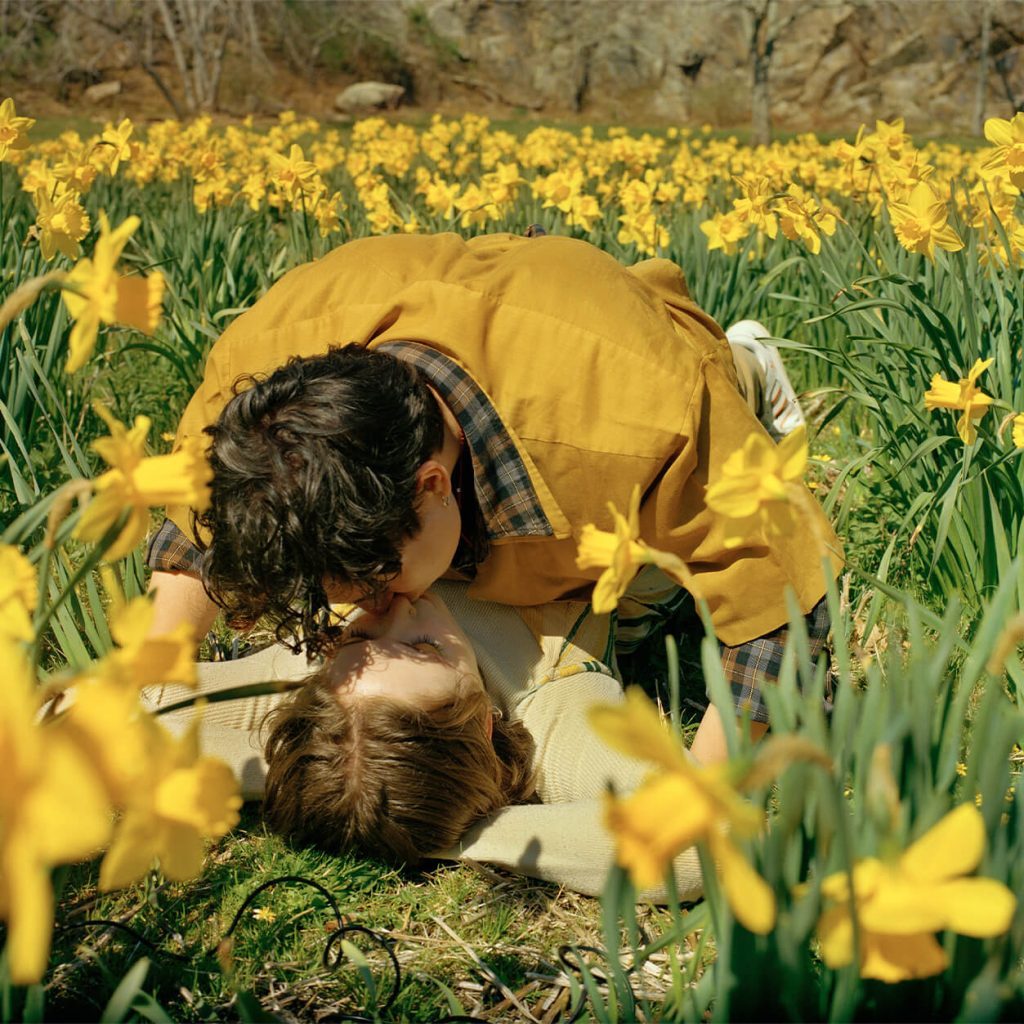
I’VE DREAMT THIS BEFORE (2024)
alina balseiro-Identifies as: latine, nonbinary, lesbian, dyke (they/them)
My series, soft thorns, is the mystified sublime that juxtaposes the reality of queer people’s everyday experiences of oppression. In “i’ve dreamt this before” I recreated a dream I had as a teenager: do a push up and kiss my partner underneath me. This full circle moment depicts the perspective of a closeted teenager to a queer adult and is surrounded by a field of joyful daffodils protecting our love.
To view all of this year’s submissions, visit the digital exhibit in our Curve Archive.