
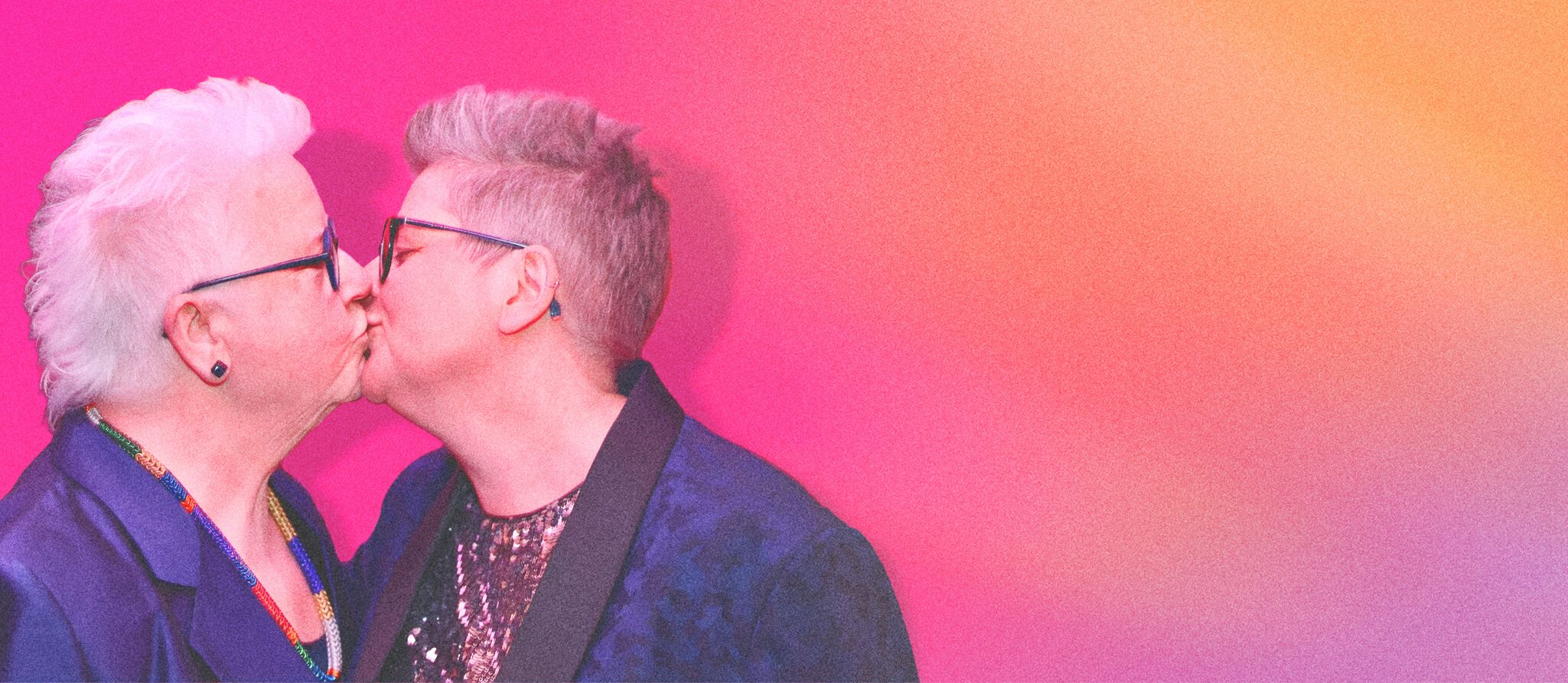
“Visibility is about making sure our lives are recognised, our experiences are understood and our communities are supported. It is about creating a world where people don’t have to fight to be seen before they can begin to thrive.”
There are moments in history when visibility feels celebratory. Pride parades. Cultural milestones. Firsts that signal progress. And then there are moments when visibility feels essential, not just a celebration of who we are, but a statement that we are still here, that our lives matter, and that our communities deserve to be seen.
Right now, in the United Kingdom, it feels very much like the latter.
Across the past year, debates about LGBTQIA+ rights have become sharper, louder and more polarised. Legal rulings, political arguments and media narratives have pulled our communities into the centre of public discourse in ways that can feel unsettling and exhausting. In April 2025, the UK Supreme Court ruled that the legal definition of “woman” in the Equality Act refers to biological sex, a decision widely criticised by many LGBTQIA+ organisations as undermining protections and recognition for transgender people.
For many people, the ruling didn’t just raise legal questions. It created a broader cultural moment, one where conversations about gender, identity and belonging have become increasingly contested. Pride events have become spaces not only for celebration but also for protest and solidarity.
Against this backdrop, something powerful happens when lesbians and queer women and non-binary people choose visibility.
Visibility becomes resistance.
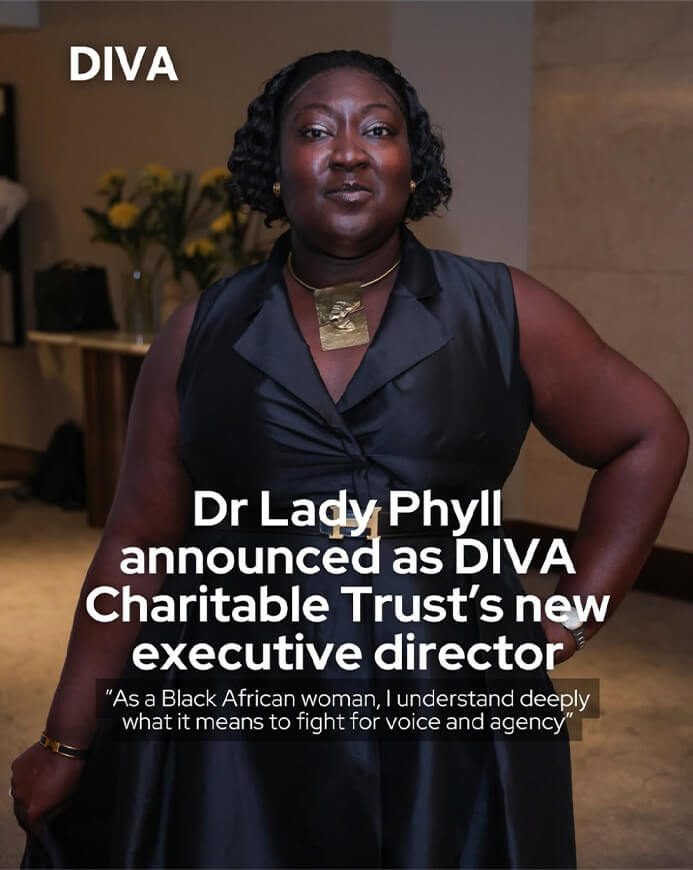
PHOTO CREDIT: DIVA INSTAGRAM
The Quiet Cost of Invisibility
For decades, lesbian visibility has existed in a complicated space. Compared to other queer identities, LGBTQIA+ women and non-binary people have often experienced what activists call “double invisibility”: marginalised both within wider society and sometimes overlooked even within LGBTQIA+ narratives. Across the UK, they are among the least visible groups in media, research and public policy, with experiences that are often overlooked or collapsed into broader LGBTQIA+ statistics.
It shows up in the data, or more accurately, in the absence of it.
Research into these communities frequently aggregates experiences together, meaning the specific realities of lesbian, bisexual and queer women and non-binary people are under-researched and poorly understood. At the same time, women’s health research has historically overlooked LGBTQIA+ populations entirely.
The result is a familiar pattern: if you are not counted, you are not considered.
And when communities are not considered in policy, funding or media representation, their needs remain invisible.
This is one of the reasons that DIVA Charitable Trust exists. The charity works to ensure LGBTQIA+ women and non-binary people are visible in media, counted in data, and connected in community because those three things together create the conditions for real change.
Or, as Lady Phyll, the charity’s Executive Director, explains:
“Visibility is often misunderstood as something symbolic, but for our communities it has always been deeply practical. When LGBTQIA+ women and non-binary people are invisible in research, policy and public life, their needs simply don’t get addressed. Visibility is about making sure our lives are recognised, our experiences are understood and our communities are supported. It is about creating a world where people don’t have to fight to be seen before they can begin to thrive.”
That truth has become increasingly clear in recent years.
A Harder Climate
While the UK remains legally more progressive than many countries, the climate around LGBTQIA+ rights has undeniably shifted.
Across Europe and North America, advocates have been warning of a broader backlash against queer and trans rights. The UK has not been immune. Legal disputes over gender identity, public debates about single-sex spaces, and increasingly polarised political rhetoric have created a climate where LGBTQIA+ people, particularly trans people, feel under scrutiny.
At the same time, hate crime statistics reveal worrying trends. Reports show that hate crimes based on sexual orientation have risen by around 44 percent over the past five years, while those targeting trans identity have nearly doubled.
Behind those statistics are real people navigating everyday life with greater caution.
It is in moments like this that visibility becomes more than a cultural celebration.
It becomes a way of saying: we refuse to disappear.
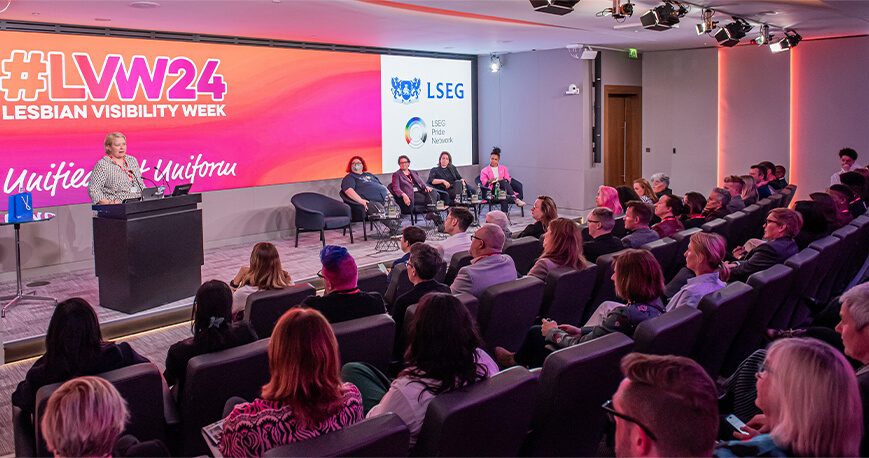
DIVA AWARDS, LONDON. PHOTO CREDIT: JONATHAN PHANG
Why Lesbian Visibility Still Matters
Lesbian visibility is often misunderstood as something symbolic: a week of celebration, a social media hashtag, a handful of cultural moments each year.
But visibility has always been political.
From the early lesbian feminist movements of the 1970s to the activism that helped secure equality legislation in the UK, visibility has been one of the most powerful tools LGBTQIA+ communities have.
Visibility challenges stereotypes and creates connection. Visibility tells the next generation that they are not alone.
It also builds something less visible but just as important: infrastructure. Community networks. Research projects. Health initiatives. Spaces where people can gather safely.
These things rarely emerge spontaneously. They grow from movements that insist their communities deserve attention, resources and investment.
And that is why events like Lesbian Visibility Week matter so much.
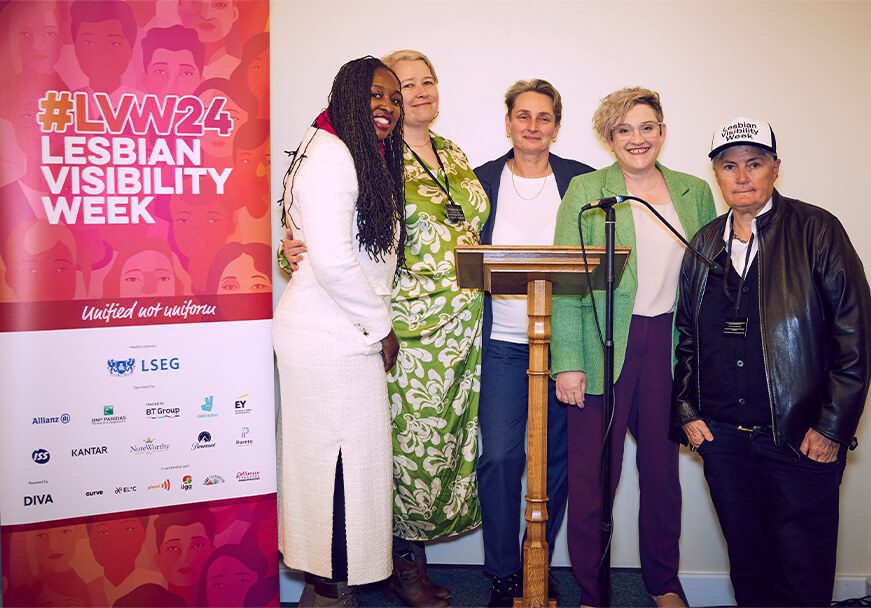
PARLIAMENTARY RECEPTION, PORTCULLIS HOUSE. PHOTO CREDIT: JONATHAN PHANG
A Transatlantic Movement
Lesbian Visibility Week is celebrated internationally, bringing together activists, community organisations and media platforms to amplify lesbian and queer voices and experiences.
One of the most exciting aspects of the movement is the collaboration between organizations on both sides of the Atlantic.
In the United States, Curve Magazine has long been one of the most important cultural platforms for lesbian storytelling and journalism. For more than three decades, Curve has chronicled the lives, politics and creativity of queer women, helping ensure our stories are told in our own voices.
In the United Kingdom, DIVA Magazine has played a similarly vital role. Since its launch in the 1990s, it has been the leading publication for lesbian and queer women in the UK, shaping culture, amplifying community voices and providing a platform for representation at a time when mainstream media offered very little.
Today, that legacy continues through DIVA Charitable Trust, the UK’s leading charity dedicated to advancing the visibility, wellbeing and equality of LGBTQIA+ women and non-binary people. Building on the cultural influence of DIVA Magazine, the charity brings together media, national campaigns, research and community programmes to address the structural invisibility that still affects our communities.
Together, these organisations represent something bigger than individual publications or campaigns. They are part of a shared ecosystem of storytelling, activism and community leadership.
And when they work together, as they do through Lesbian Visibility Week, they help create something powerful: a truly international movement for visibility.
Because while political climates differ between countries, many of the challenges facing queer women and non-binary people (invisibility, underrepresentation, lack of research) are remarkably similar.
And so too are the solutions.
Community.
Storytelling.
Solidarity.
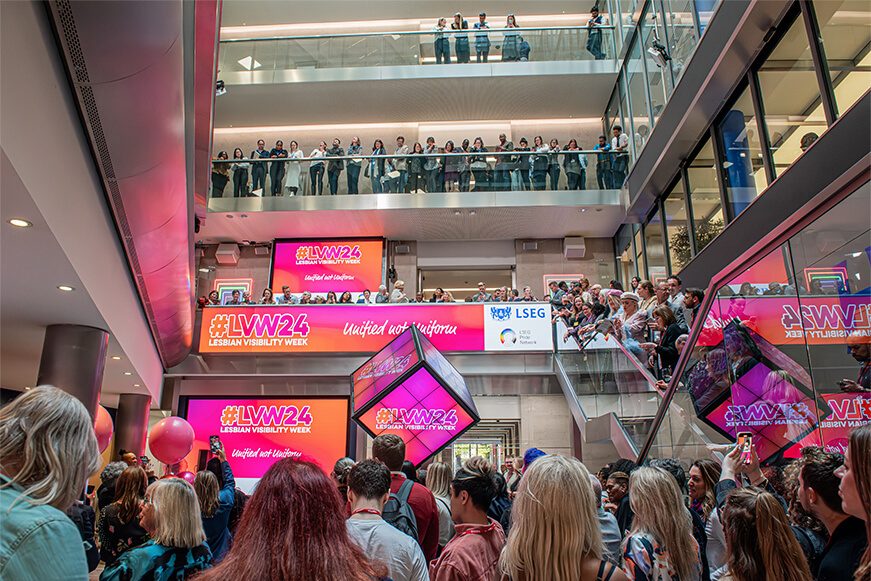
LONDON STOCK EXCHANGE. PHOTO CREDIT: LSEG
Health, Wellbeing and
the Power of Community
This year, Lesbian Visibility Week focuses on health and wellbeing, a theme that feels particularly urgent right now.
Across many LGBTQIA+ communities, mental health challenges remain disproportionately high. Experiences of discrimination, isolation and lack of access to inclusive services all play a role.
For lesbian and queer women and non-binary people, these challenges are often compounded by invisibility in healthcare systems that rarely collect data on sexual orientation or gender diversity.
But there is also reason for hope.
Across the UK, grassroots organisations are building spaces that prioritise community care and connection. LGBTQIA+ sports clubs, community groups, and mental health initiatives continue to thrive even in uncertain times. Following legal debates around trans inclusion, many grassroots sports organisations publicly reaffirmed their commitment to inclusive spaces, demonstrating the resilience of community-led movements.
These acts of solidarity matter more than we sometimes realise.
They remind us that community is not something abstract. It is something we build together, often quietly, often locally, but always with intention.
“Visibility creates possibility. When people see themselves reflected in the world around them, it changes what they
believe is possible for their own lives and for their communities..”
What Visibility Looks Like Now
Visibility today doesn’t look the same as it did even ten years ago.
It is no longer confined to media representation or Pride parades. It appears in research reports that document our experiences. In community groups organising events in small towns. In digital spaces where queer people share stories and support one another.
And increasingly, visibility also means advocacy. It means challenging misinformation. Supporting trans inclusion. Insisting that LGBTQIA+ rights are human rights.
This kind of visibility requires courage. But it also creates possibility. Because when people see themselves reflected in public life — in media, politics, research, and culture — it becomes easier to imagine a future where equality is not fragile.
The Future We Are Building
Lesbian Visibility Week is ultimately about more than a single week. It is about the future we are building together.
A future where LGBTQIA+ women and non-binary people are visible in media, counted in data, and connected through strong community networks.
A future where queer young people grow up seeing lives like theirs reflected everywhere: in leadership, in culture, in politics.
And a future where solidarity across borders strengthens the global movement for equality.
As Lady Phyll puts it:
“Visibility creates possibility. When people see themselves reflected in the world around
them, it changes what they believe is possible
for their own lives and for their communities.”
In moments when the world feels uncertain, visibility becomes an act of optimism. A belief that telling our stories still matters. That community still matters. That the future can still be better.
And so we show up.
Visible.
Connected.
Unapologetically ourselves.
Because visibility is not just about being seen.
It is about building a world where everyone belongs.
About the author
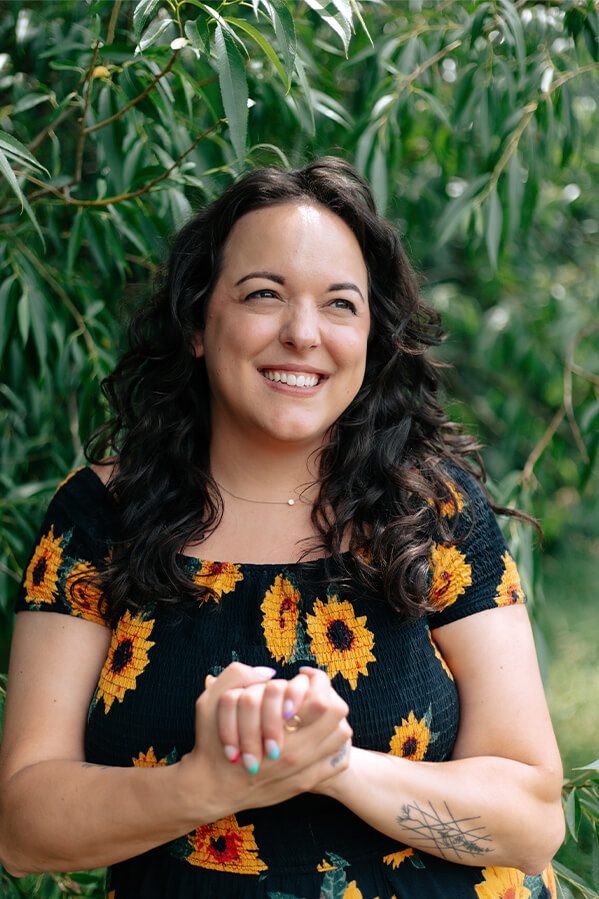
Jo Atkins-Potts is a writer, speaker, and advisor working with leaders and organisations navigating complexity, responsibility, and change. She offers strategic advisory, leadership programmes, alongside writing on grief, power, and the human realities of building change.
Lesbian Visibility Week is powered by The Curve Foundation in the US and Canada and by DIVA Charitable Trust in the UK.
Find out more about LVW USA/Canada, and LVW/UK.