

MYRA MOLLOY AS SONYA AND MAYA DA COSTA AS COLEY IN HAYLEY KIYOKO’S GIRLS LIKE GIRLS.
PHOTO CREDIT: FOCUS FEATURES
Coming out is hard; coming into being is even harder. Lesbian renaissance artist Hayley Kiyoko has made this distinction into an art form and has often discussed her own journey in interviews as the inspiration for her work, saying that while she knew she was gay at the age of five, her struggle to fully accept her identity continued until her 20s. Back in 2018, Kiyoko spoke with Curve during a tour in which female fans were throwing their bras onto the stage. Kiyoko, now 35, has always resonated with our community because of what she stands for. Her songs are tender, personal, and insightful.
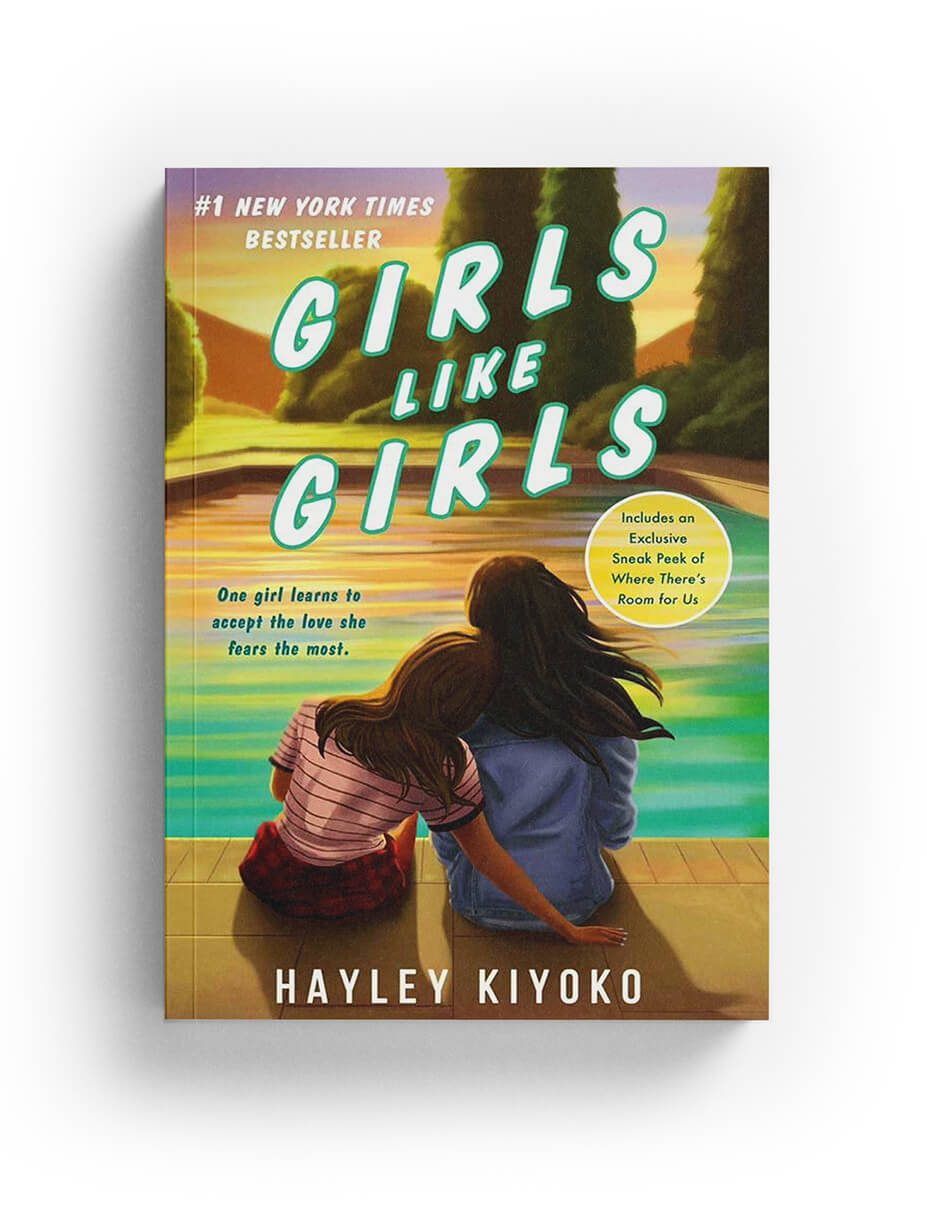
Kiyoko’s biggest hit is widely considered to be “Girls Like Girls,” released in 2015. Its music video—which she co-directed—has over 162 million views. With its chorus, “Girls like girls like boys do, nothing new,” it’s a queer anthem.
“That song was just a piece of my story and my truth as an artist,” Kiyoko told Curve at the time. And most of Kiyoko’s songs “present lesbian relationships as the everyday affairs they are for most of us,” wrote Victoria A. Brownworth.
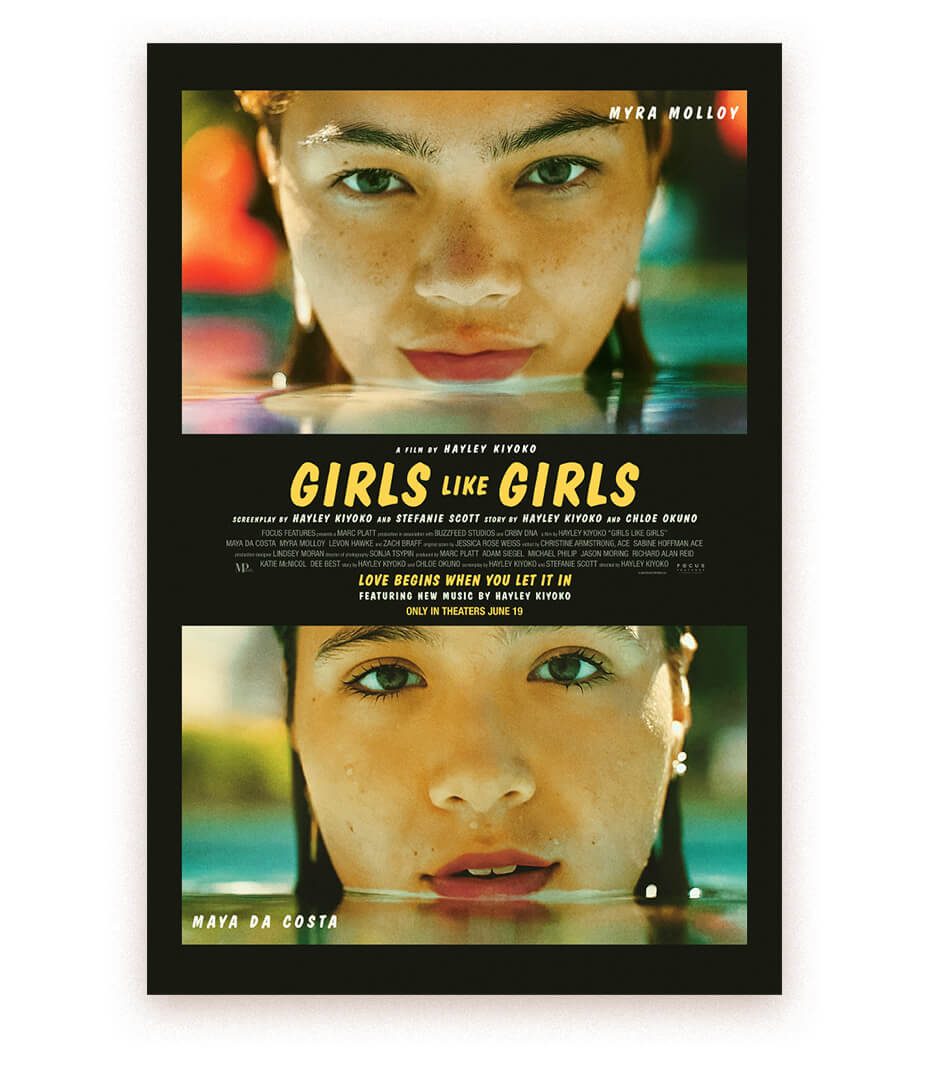
“Girls Like Girls” became a novel, and now it’s a feature film from Focus Features, released on June 19. Kiyoko, who began directing her own music videos “out of necessity,” directs the film from a story she co-wrote with Chloe Okuno and a screenplay she co-wrote with Stefanie Scott. And as with her music videos, the film has a very specific aesthetic and a determination to make lesbian representation cinematic.
Girls Like Girls is an extended, bittersweet, coming-of-age love story set over the course of one revelatory summer. Starring Maya da Costa as the shy and tomboyish new girl Coley, and Myra Molloy as the popular and flirtatious Sonya, Girls Like Girls might have a simple, self-explanatory title, but it goes much deeper. Set in small-town Oregon in 2006, the story follows Coley as she navigates living with a father she never knew (Zach Braff) after the death of her Asian mother, while negotiating with a slightly hostile, homophobic new friend group. Coley is immediately smitten with the glamorous and confident Sonya. The two girls flirt and communicate over nascent technology (AIM Messenger!) as their feelings for each other deepen, but have no sanctioned outlet. Of the two, Coley is more honest about exploring her feelings, but Sonya’s journey to embracing her sexual orientation is more conflicted. Will this attraction survive the summer and follow them into adulthood?
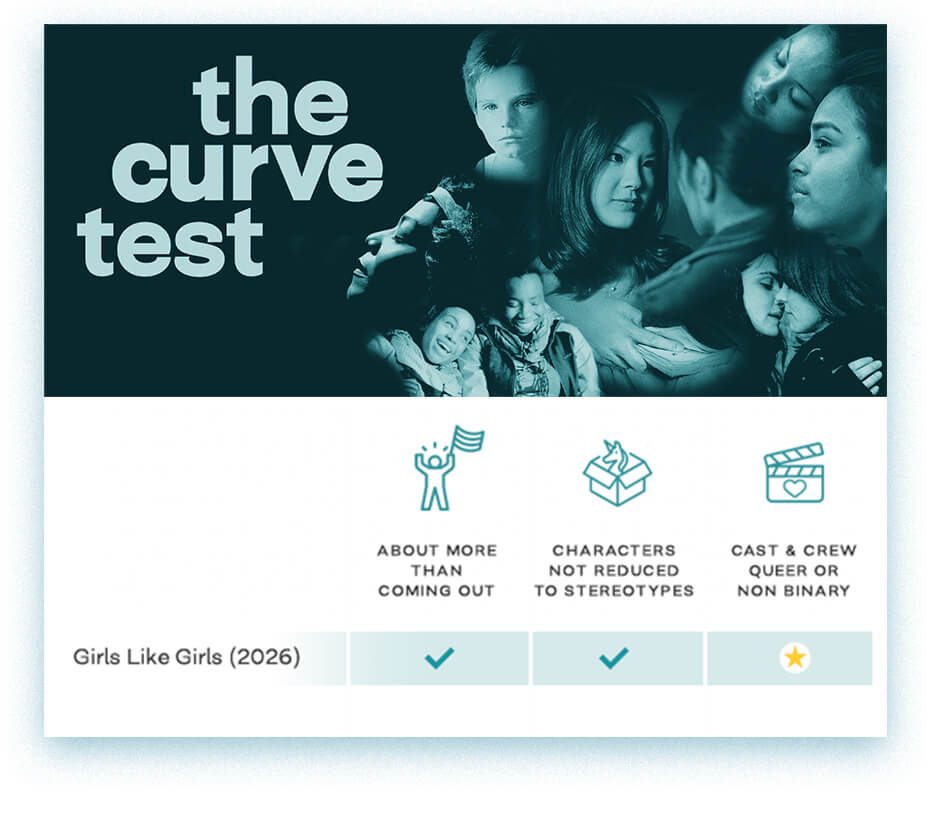
Undoubtedly set to be the lesbian movie of the summer, it’s also an ideal candidate for The Curve Test. (Films and series that pass the Curve Test help broaden and deepen representation beyond the stories that reduce LGBTQ+ women, trans, and nonbinary people to stereotypes.) Let’s take a look.
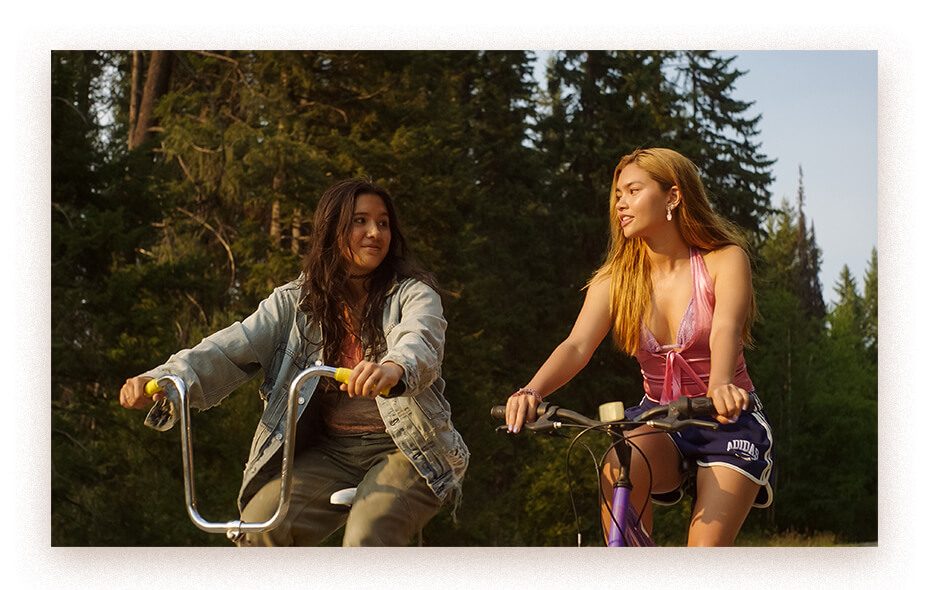
MAYA DA COSTA AS COLEY AND MYRA MOLLOY AS SONYA IN HAYLEY KIYOKO’S GIRLS LIKE GIRLS.
PHOTO CREDIT: FOCUS FEATURES
About more than coming out:
The lesbian experience is the human experience
Coley is insecure and sensitive but hopeful about her same-sex attraction. Sonya, an affluent, award-winning dancer, is more self-assured but less honest. The pain of this dance is indescribable unless you’ve been through it, which many lesbians have. Especially noteworthy is Coley’s determination to fight the setbacks and runarounds to claim her feelings as authentic. And as she goes through it all, Coley never goes to her dad and “comes out.”
“I think part of it is coming out to herself because there’s not really a moment where she outwardly says it to a lot of people,” da Costa tells Curve. “It’s coming into herself and realizing it and experiencing it and sharing it with someone. Just coming into herself for so many other areas of her life as well, like regarding her family, and the way that she operates, and who she is.”
Molloy agrees that it is “a beautiful coming-of-age story” rather than a coming-out story. “This is such a tender story, and I think it’s rare that we get to work on things we really, really care about. And I know we care about Hayley. We care about the story. We care about each other. While we were on our own journey of self-discovery on the film, our characters were also going through that.”
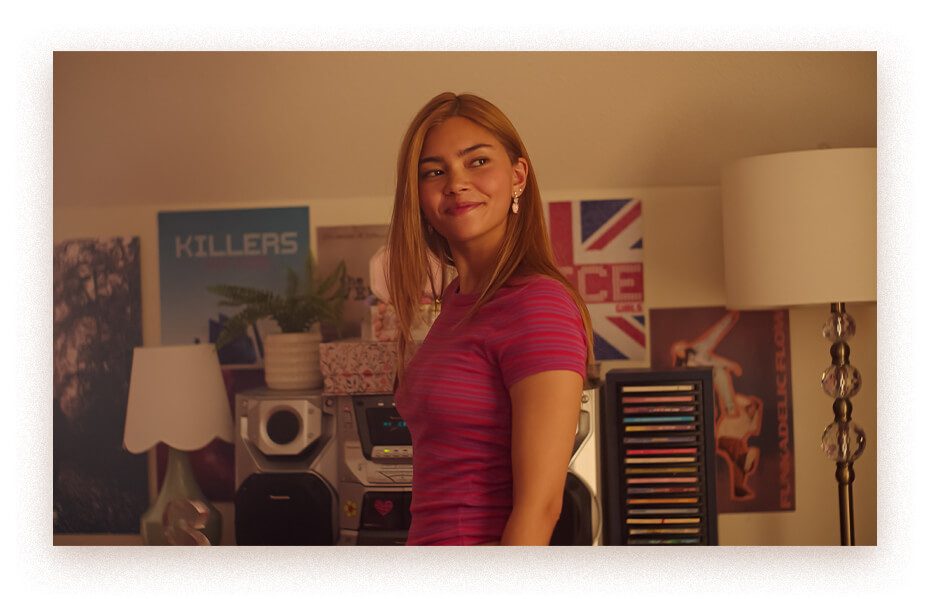
MYRA MOLLOY AS SONYA IN HAYLEY KIYOKO’S GIRLS LIKE GIRLS.
PHOTO CREDIT: FOCUS FEATURES
Coming into rather than coming out is an important distinction to make, as one does not necessarily always guarantee the other. Sonya knows she likes girls, but the “inner turmoil” her internalized homophobia causes leads to destructive behaviors (drinking, deception). The portrayal is painful but relatable and instructive. “There’s still a part of me that’s still discovering how to communicate, that’s still discovering how to love,” says Molloy. “And I think that’s really what the film portrays: coming to terms with yourself, coming to terms with loving someone, and your identity too.”
Girls Like Girls is set in 2006, which roughly aligns with Kiyoko’s own journey, but da Costa thinks the era rings true for many Gen Zs, with the archaic technology more clearly representing unarticulated feelings.
“I feel like for many young people that I know, and even for me as well, when I was figuring out my sexuality, it wasn’t like I needed to declare it. I feel like this movie is really about the experience more than the expression. They’re not going to be able to be like, this is what I’m feeling in this way, because they’re both figuring it out. Coley for sure. And Sonya’s character is layered and going through so much. And Myra portrays it so beautifully.”
Both characters are “a little bit messy,” she says. It’s extremely cathartic for older viewers whose hearts will go out to the girls and want to help them avoid the mistakes they inevitably have to make, and perhaps made themselves back in the day.
“We’re always our emotions,” explains da Costa. “We’re always figuring things out. And I think this movie is different from [coming-out] films because we’re not explicitly feeding the audience; it’s through our actions, our characters’ chemistry, and the way we dance around each other and in our own lives. That’s why I think the film is so beautiful, because it’s genuine. It’s the human experience.”
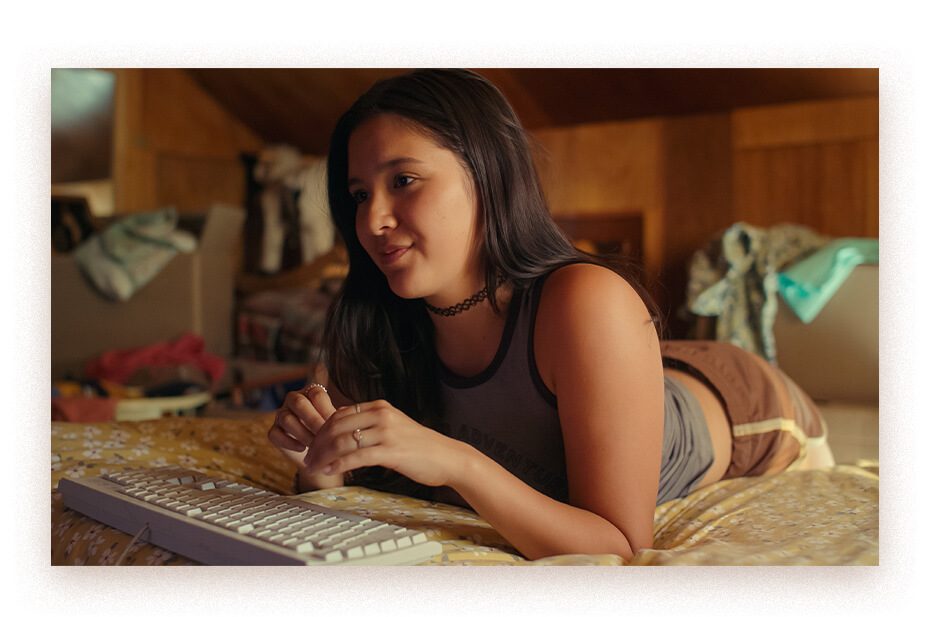
MAYA DA COSTA AS COLEY IN HAYLEY KIYOKO’S GIRLS LIKE GIRLS.
PHOTO CREDIT: FOCUS FEATURES
Characters not stereotypes:
A reflection of us
It is still rare to see Asian-American queer women in leading roles on screen. A Geena Davis Institute study examining films from 2010–2024 found that 0% of top-grossing Hollywood movies featured an LGBTQ Asian-American lead.
Japanese-American Kiyoko’s directorial debut takes diversity on screen in its stride. In Girls Like Girls, mixed-race and queer Asian-Pacific Islander women are the stars: Da Costa is Vietnamese-Portuguese-Canadian, and Molloy is Thai-American. And there are nuances in class as well. When Coley gets her first job as a server in a sushi restaurant, Sonya and her well-to-do family come in, and Coley is humiliated but still finds the courage to confront her crush.
While the film does not use LGBTQ+ labels, we feel the specter of homophobia: the anger of Sonya’s boyfriend at the girls’ intimacy. But when Coley’s father expresses concern for his daughter’s emotional and physical safety, her sexuality is not the focus: he is trying to repair the damage of his own distance.
Molloy and da Costa are beautiful new faces, talented at balancing the young women’s attempts to simultaneously fit in and stay individuals. Molloy says Kiyoko sifted through 5,000 auditions to find the perfect Coley and Sonya. The search seemed to end when she found two actors who could demonstrate that feelings are key to identity formation.
Da Costa sent in her audition tape after researching the project and seeing “a lot of parallels” with her own life. It was the first tape Kiyoko would see—her first and final choice for Coley. The character “was definitely a part of me,” says da Costa. For Molloy’s part, when she read the script, she “sobbed.” “The way she paired us together, like she saw something in us. Maya is the most gracious, wonderful actress ever.”
“Truthfully, I want to create art that inspires people to find comfort with whatever they’re going through in their own life journey,” Kiyoko told Curve seven years ago. “For them to feel included and validated. Know that you are enough and your feelings are valid.”
“I think to be understood is to be seen, and to be seen is to be loved,” says Molloy. “And both Maya and I, after we saw the film, were both in tears, and Hayley was like, ‘What do you feel?’ And we were like, ‘We both feel really seen, like these characters.’ I think no matter who walks into that theater, you’re going to see a part of yourself, whether you’re in the community or not, but especially if you’re in the community. And I just hope that this movie champions everyone and allows people to step out more confidently in their lives and really feel loved because I think that’s what cinema should be, a reflection of us.”
Da Costa is planning to see the film in a theater for Pride and to take family and friends. “We’re all going to go watch it and we’re going to walk out of it feeling like some part of us has been seen and we don’t have to explain it to anyone.”
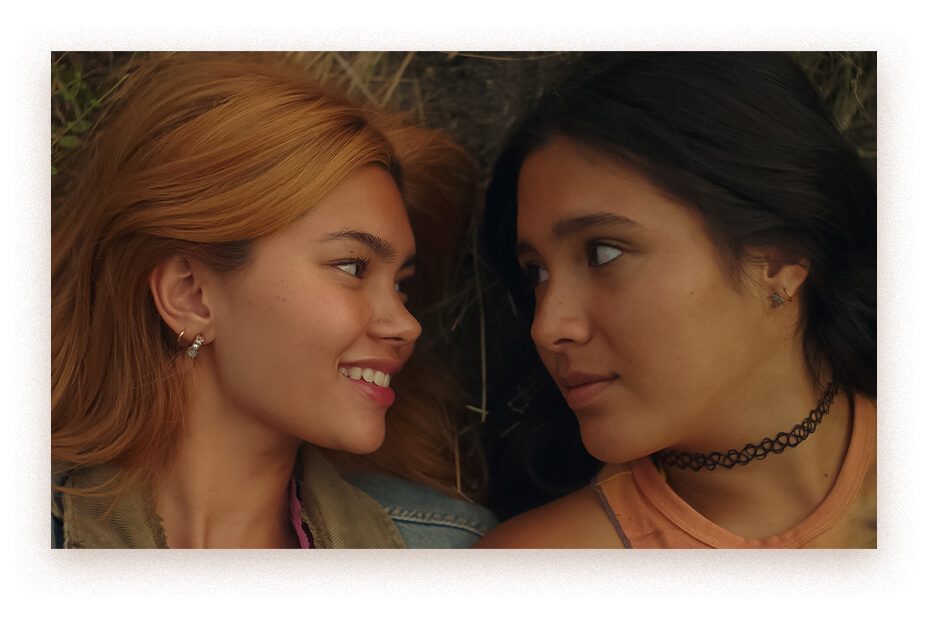
MAYA DA COSTA AS COLEY AND MYRA MOLLOY AS SONYA IN HAYLEY KIYOKO’S GIRLS LIKE GIRLS.
PHOTO CREDIT: FOCUS FEATURES
Cast and crew LGBTQ:
Hayley Kiyoko is ‘a fearless lesbian leader’
Kiyoko initially gained fame as a Disney Channel actress, then her viral pop song mission for same-sex attracted young women earned her the moniker “Lesbian Jesus” from fans. Far from being blasphemous, the tag identifies Kiyoko as a prophetic and inclusive figure with an unapologetic message: to bring lesbian narratives into the mainstream fold.
As the creator, Kiyoko provided a predominantly female team and a safe experience during filming. Principal photography took place in British Columbia, Canada, with Sonja Tsypin as cinematographer, Stefanie Scott as co-writer, Christine Armstrong and Sabine Hoffman as editors. The crew was majority non-binary, queer, and women of color. Jessica Rose Weiss composed the score for the film with additional music by Kiyoko.
Molloy shares, “It was just such a strong, supportive kind of environment. This has been Hayley’s story for the past 10-plus years. There’s so much intentionality, thought, care, and precision. She has such a strong vision. I always say it was the best summer of my life because I got to work with Maya and Hayley, and Hayley was just our fearless leader.”
“And because of her, she’s fought for this for so long, and you can feel the fight and the vision in the film. And it’s just so beautiful to witness.”
Girls Like Girls is in theaters nationwide on June 19.
Watch the trailer here.