
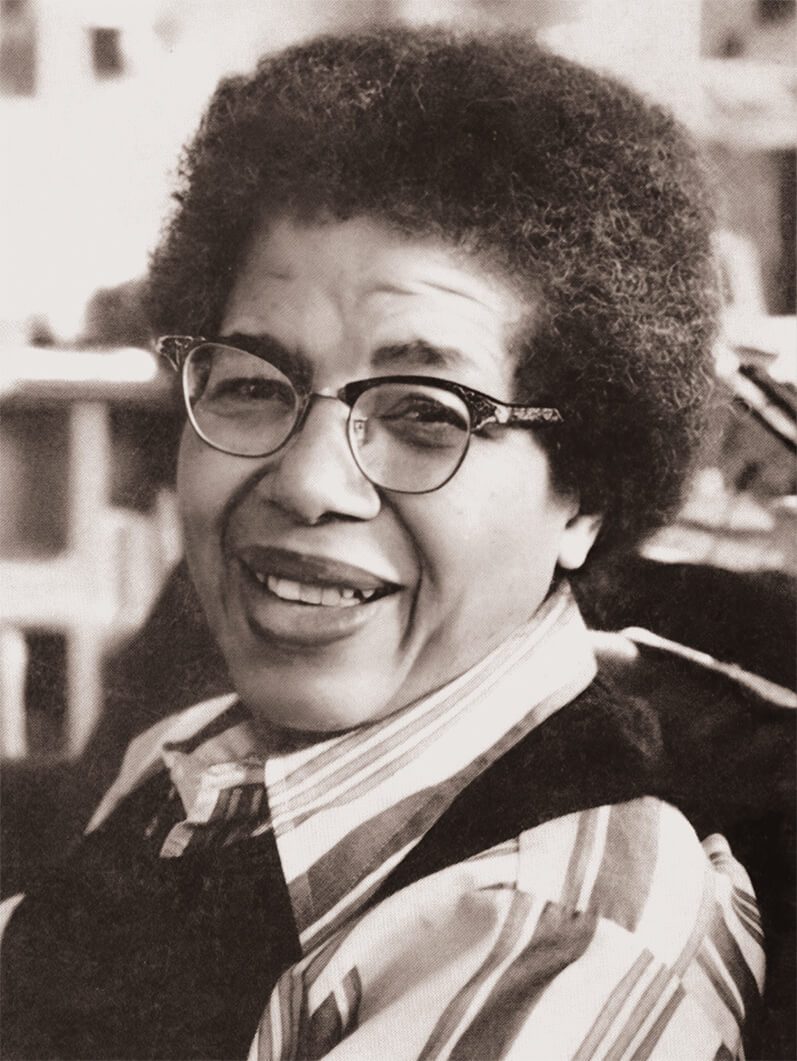
PHOTO: TEE A. CORINNE VIA JULIE ENSZER AT SINISTER WISDOM
Anita Cornwell was a Black lesbian journalist who was intentional about naming. (Anita studied Journalism at Temple University and graduated in 1948.) At a time when she was the only out black lesbian writing for the Negro Digest and The Ladder in the 1950s, she named how pervasive sexism and homophobia were in the black community and movement for civil rights; at a time when she was the only Black lesbian [journalist] in the women’s movement in the early 1970s, she cited their anti-Blackness; and, at a time when she longed for connection with black women, she underscored how the chokehold of Christianity and the myopic belief in the Black family not only stifled their relation to each other, but also made the critique of Black patriarchy inconceivable: “Not the least of the many problems that the Black Lesbian has to contend with is the extreme conservatism that prevails in the Black community … white people seem to consider Black people ‘liberal’ because of our insistence on racial equality. That is not liberalism but is simply a healthy instinct for self-preservation.”
I came to Anita’s work because I wanted to study the contours of survival and to be under the tutelage of a Black lesbian marking the shape of freedom before it was fashionable.
Anita was born in her grandmother’s house on September 23, 1923, in Greenwood, South Carolina. At age 15, her grandmother, Iola, invited Anita to attend the World’s Fair in New York City. This moment was the impetus that led Anita and her mother to move up north to Philadelphia.
Because Anita grew up “Black, poor, and female, in the Deep South,” her class analysis and astute coherence of interlocking oppressions made her a revolutionary writer. Anita wrote with clarity about the relationality between domestic tyrannies and transnational forms of subjugation. From “…Black sisters in my own front yard who are raped, beaten, and/or murdered with monotonous regularity and whose violators are almost never apprehended because our white law insists that Black womyn do not exist” to “…Castro’s oppression of homosexuals in Cuba,” she presents a revelatory exemplar of a non-hierarchical reading of oppression. Anita’s scrutiny is incisive.
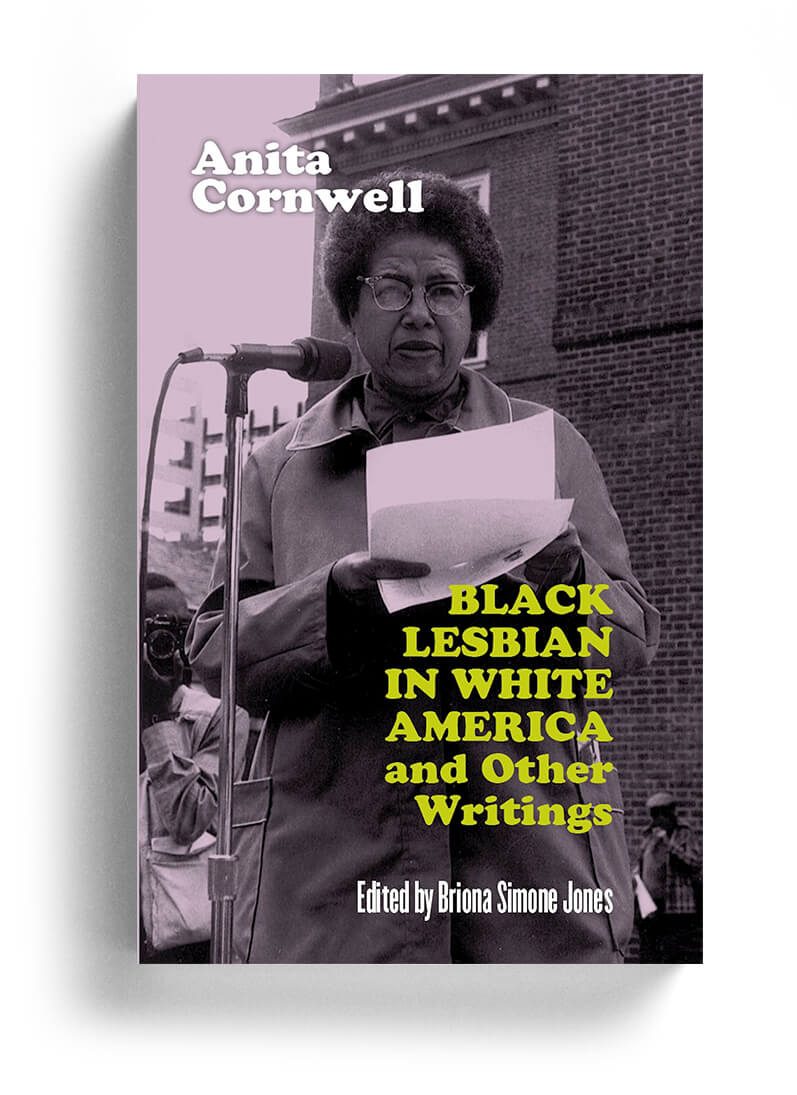
A founder of the field of Black Lesbian Studies, Anita is not only the first out Black lesbian writer, but she is also the first Black lesbian to publish a collection of essays. Divided into four parts, Black Lesbian In White America is a repository of black lesbian life, an archive of possibility and dreams deferred. In the center of this book, you will find a gem in the form of a riveting interview between Anita and Audre Lorde, and near its end, there are previously uncollected and unpublished poems by Anita—a generous offering from Ann Allen Shockley and a gift from me to you. In this text, Anita traverses the terrains of grief, misogynoir, patriarchy, class, imperialism, white supremacy, and antiblackness while also managing to articulate the nuances of love, desire, and freedom. This enduring body of work is boundless and unabashed.
Anita was committed to Black lesbian writers, and there was not a singular person in her cohort whose work she did not support nor deeply engage with.
Anita helped found the Philadelphia chapter of Radicalesbians and also joined the Daughters of Bilitis. She made every effort to meet Pat Parker, Audre Lorde, Ann Allen Shockley, and Cheryl Clarke—their respective archives evidence this intentionality. Collectively, these writers supply us with new grammars of possibility and offer recourse against this antiblack world that we all inhabit. Read their work. Teach their work. Share their work. Anita’s papers are housed at the William Way Center in Philadelphia, PA.
Anita modeled the Black lesbian adage of knowing the danger and going there anyways. Republishing Black Lesbian In White America during the height of global fascism, where words like Black and lesbian are prohibitive, is a seditious act, “a charge of irresponsible citizenship.” (M. Jacqui Alexander, Pedagogies of Crossing: Meditations on Feminism, Sexual Politics, Memory, and the Sacred)
I take pleasure in rebellion.
Black Lesbian In White America and Other Writing is available now from Sinister Wisdom and wherever books are sold.
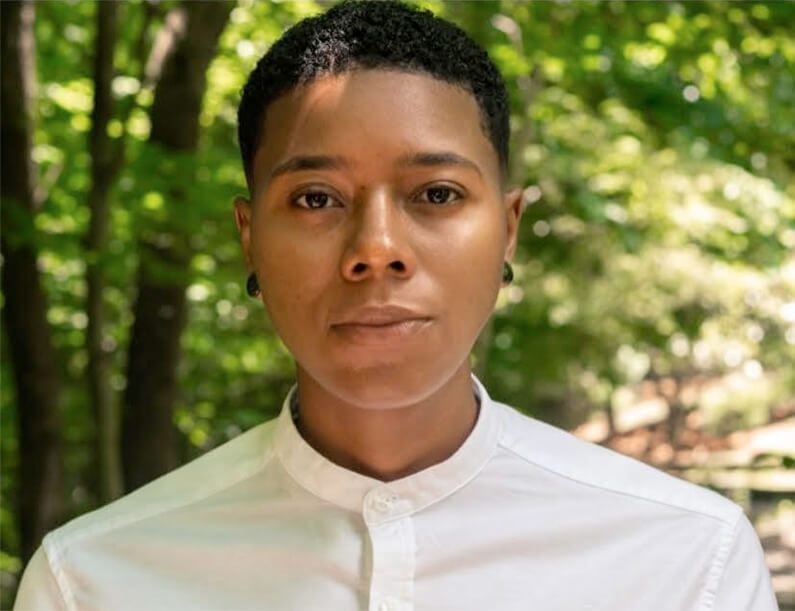
About Briona Simone Jones
Dr. Briona Simone Jones is the Audre Lorde visiting professor of queer studies at Spelman College. Before joining Spelman, Dr. Jones was an assistant professor in the University of Connecticut’s Department of English, focusing on women’s, gender, and sexuality studies. Prior to that, she spent six years at Michigan State University, where she completed her Ph.D. and held roles as a full-time instructor, University Distinguished Fellow, and intergroup race dialogues facilitator for the Office of Inclusion and Intercultural Initiatives. Dr. Jones’s research and teaching span African American literature since 1895, Afro-Diaspora studies, queer theory, Black feminism, decolonial thought, gender and sexuality studies, comparative ethnic studies and Black studies. Briona Simone Jones is currently an Assistant Professor at the University of Connecticut and the editor of Mouths of Rain.
About Anita Cornwell
In addition to writing for the Negro Digest and The Ladder in the 1950s, Anita’s writings also appeared in Feminist Review, Labyrinth, Azalea: A Magazine by Third-World Lesbians, and BLACK/OUT. In 1989, Anita published a young adult book, The Girls of Summer. Anita was the first Black woman writer to identify publicly as a lesbian in print. She died in 2023 at the age of 99.
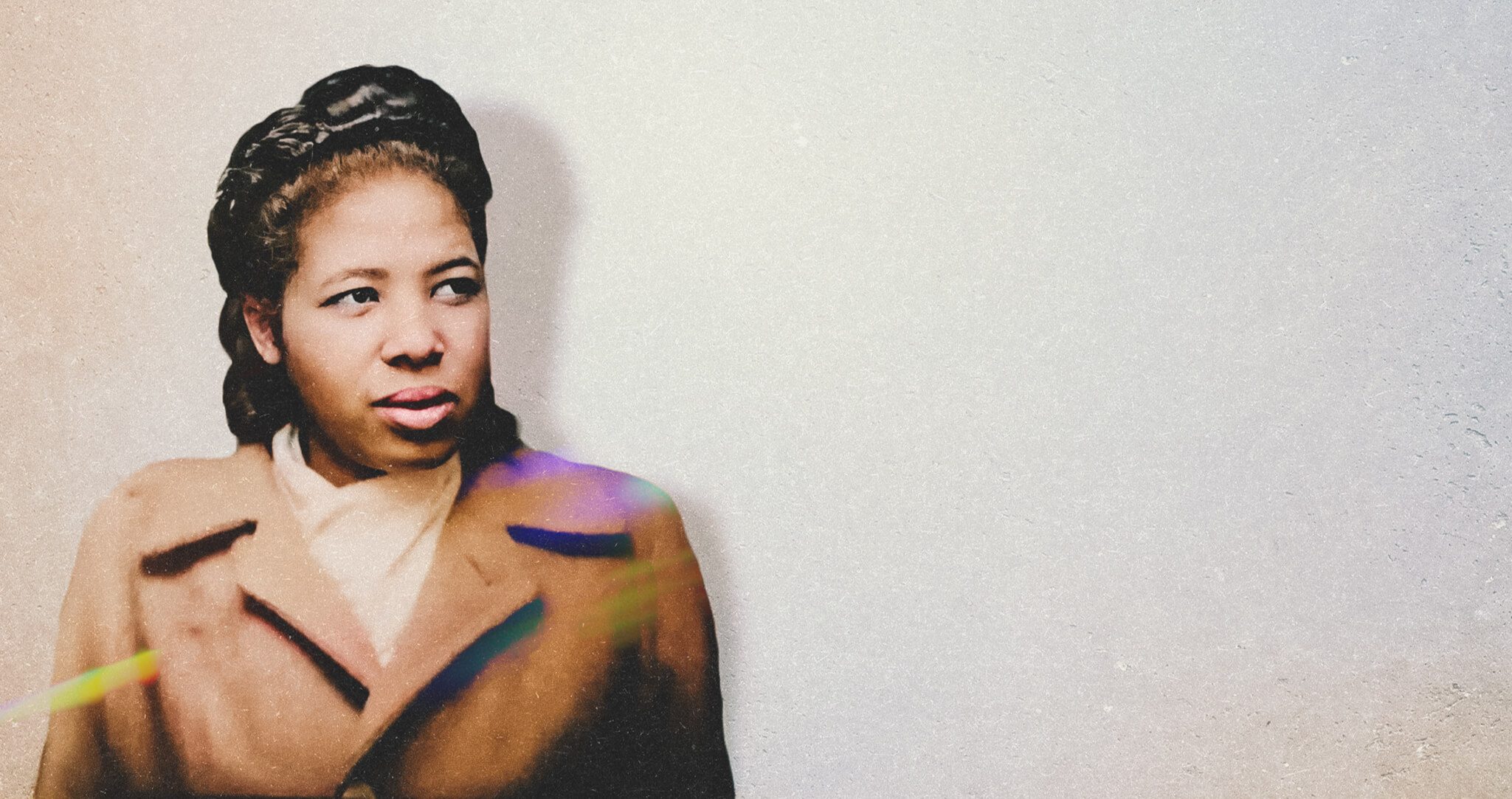
HEADER IMAGE: ANITA CORNWELL PORTRAIT, CIRCA 1940s.
(PHOTO COURTESY OF THE RARE BOOK DEPARTMENT OF THE FREE LIBRARY OF PHILADELPHIA, DIGITIZED BY AINSLEY WYNN EAKINS, COLORIZED BY CURVE)