For five years, I wrestled with a concept of something intangible, unformed.
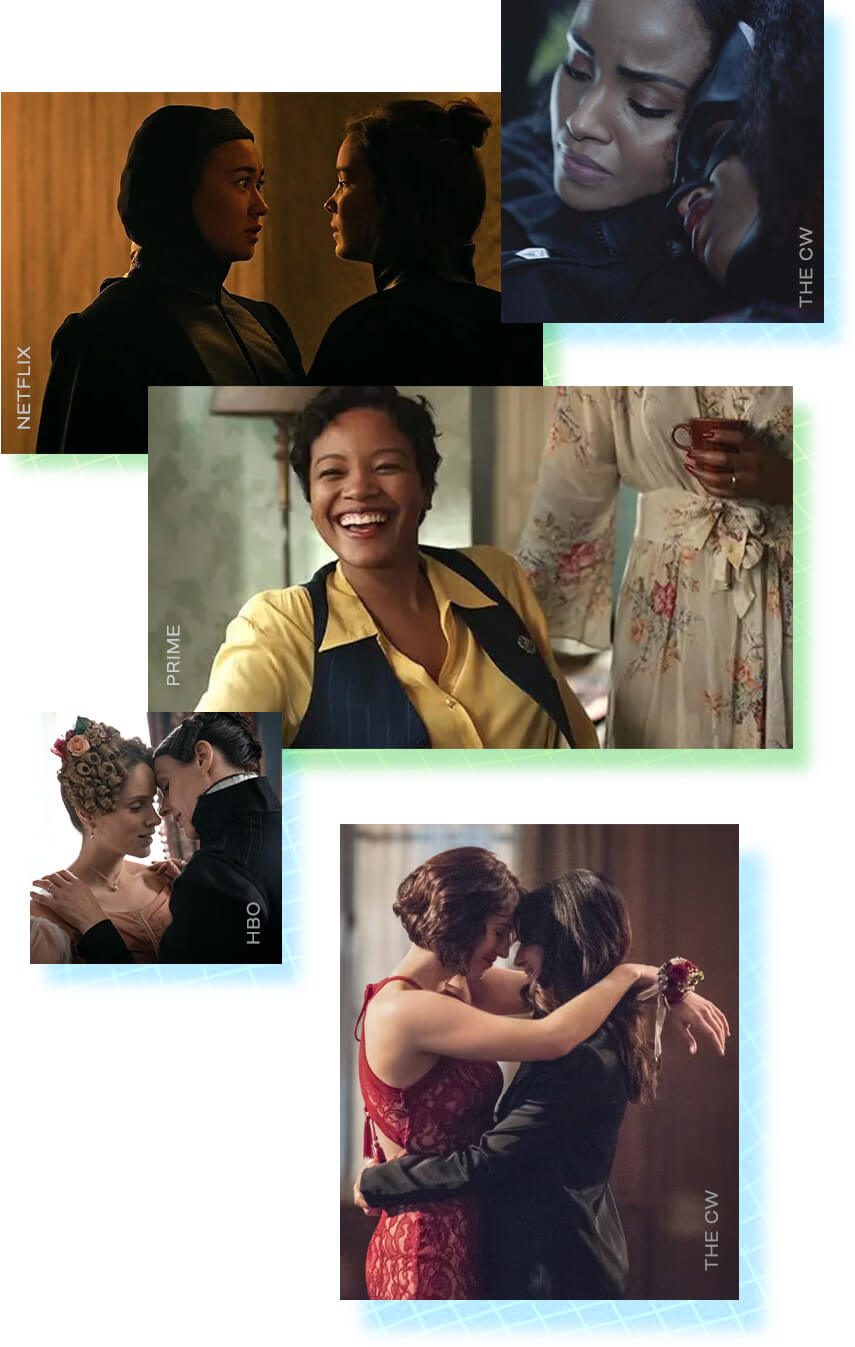
The framework, nebulous and bold, lingered in the back of my mind, growing alongside a rising ache: a frustration with the digital landscape and the slow, painful disappearance of lesbian stories from our screens. The cancellations kept coming: Warrior Nun, A League of Their Own, Gentleman Jack, Batwoman, and Supergirl.
Shows that enthusiastically centered queer women, especially older women, in narratives of love, strength, joy, and survival. Most of them lasted only a season or two – just long enough for us to fall in love.
These weren’t just television shows. They were blueprints. Proof that our stories carry weight. That lesbian lives are complex, magnetic, and worth following. Their cancellations weren’t just losses; they were reminders of how easily we’re sidelined. But I didn’t see an absence, I saw an opening.
The concept I was imagining wasn’t fleeting. It was intentional. It was necessary.
As social media hardened into a machine of speed and suppression, queer creators, especially lesbians, were shadowbanned, miscategorized, or erased. I watched in real time as they were suppressed, shadowbanned, or quietly erased by algorithmic design. According to Them, Instagram has been “unwittingly censoring” queer content since at least 2017, often removing hashtags like #lesbian and #gay from explore pages or flagging them as inappropriate under vague guidelines meant to protect “community safety.” In reality, this has worked to bury our stories, erase visibility, and fracture community memory.
GLAAD’s 2025 Social Media Safety Index confirms this trend: “Meta’s platforms continue to underperform in protecting LGBTQ users,” noting that queer content is frequently mislabeled as spam or flagged for “Hateful Conduct” while actual hate speech and harassment remain largely unchecked. As Tech Policy Press reports, Meta’s moderation changes are already having “real-world impact,” disproportionately silencing marginalized voices under the guise of neutrality.
ERASURE AS INSPIRATION
What looks like ‘neutrality’ online is, in truth, cultural erasure. The Black Orbit is my refusal to let our narratives disappear into the algorithm—and an invitation to turn our gaze away from Instagram toward a space built with care, lineage, and intention.
And yet, amid this digital suppression, a new kind of cultural archive was taking shape. Pages like @onyour.knees, @bigdyk3_nyc, @luvvjones, and The Unsolicited Truth on YouTube and X- emerged as bold, embodied beacons of lesbian media, culture, and community in a social media renaissance.
Reclaiming lesbian culture beyond the shadow-banned hashtags and restricted content of various platforms. Their presence was and is resistance.
And alongside these rising voices, I found myself reflecting on earlier grassroots networks that made connection possible before social media took hold.
One that stayed with me was WeepyEyes, a community-built platform that began as a simple Google Form circulated in the 2010s, linking sapphic films, playlists, and media recommendations shared by lesbians worldwide.
It operated quietly, URL-to-URL, long before algorithms dictated visibility. Some called it “an underground sapphic Netflix,” but I think of it more as an act of collective longing, a reminder that lesbian culture has always survived through ingenuity and care.
Watching projects like that flourish proved something to me: the desire to archive, connect, and share has always existed. We’ve just been waiting for new infrastructure to hold it. The Black Orbit is my answer to that lineage, a continuation and expansion of those early digital sanctuaries.
These were the wayshowers that fueled the inception of The Black Orbit.
For the first time, I was seeing lesbian life and culture take center stage in my feed. And I realized how few spaces like this had ever existed for me as a zillennial.
I didn’t grow up in the era of 200+ lesbian bars scattered across the U.S., offering connection, safety, and a reliable grapevine of information and resources. I was raised in a suburban Jewish town in New Jersey, a lower-middle-class Afro-Indigenous child of a single mom, a gender-nonconforming lesbian trying to make sense of myself through whatever images and fragments I could find, between YouTube clips, movies, message boards, fanfiction, smut, and Tumblr. I was studying who I was and who I might become, the way many of us do: quietly, online, and mostly alone.
But once I experienced my “gay awakening,” I never turned back. I let myself love women loudly. I wrote about it. Photographed it. Built projects and organized in college around queer visibility, justice, and access.
In my first year of college at Temple University’s Klein School of Communications, I studied journalism. I still struggled to find my place or a path towards celebrating women in the media, even though I was outspoken about this desire.
So, I played with code. I handed out zines on campus and city-wide. I showed up at protests and staffed community centers offering STI testing and safe spaces for queer youth (such as Galaei Philly). And slowly, I began noticing a larger problem: vital information was unused and becoming buried in the social media landscape. Resources were disappearing into algorithmic holes or hidden behind paywalls and gatekeeping. I saw firsthand how social media could mimic the very systems it claimed to dismantle.
So I started asking questions. What came before the internet, radio, and newspapers? What did information-sharing look like then? Could we reclaim something essential from those roots and build something new?
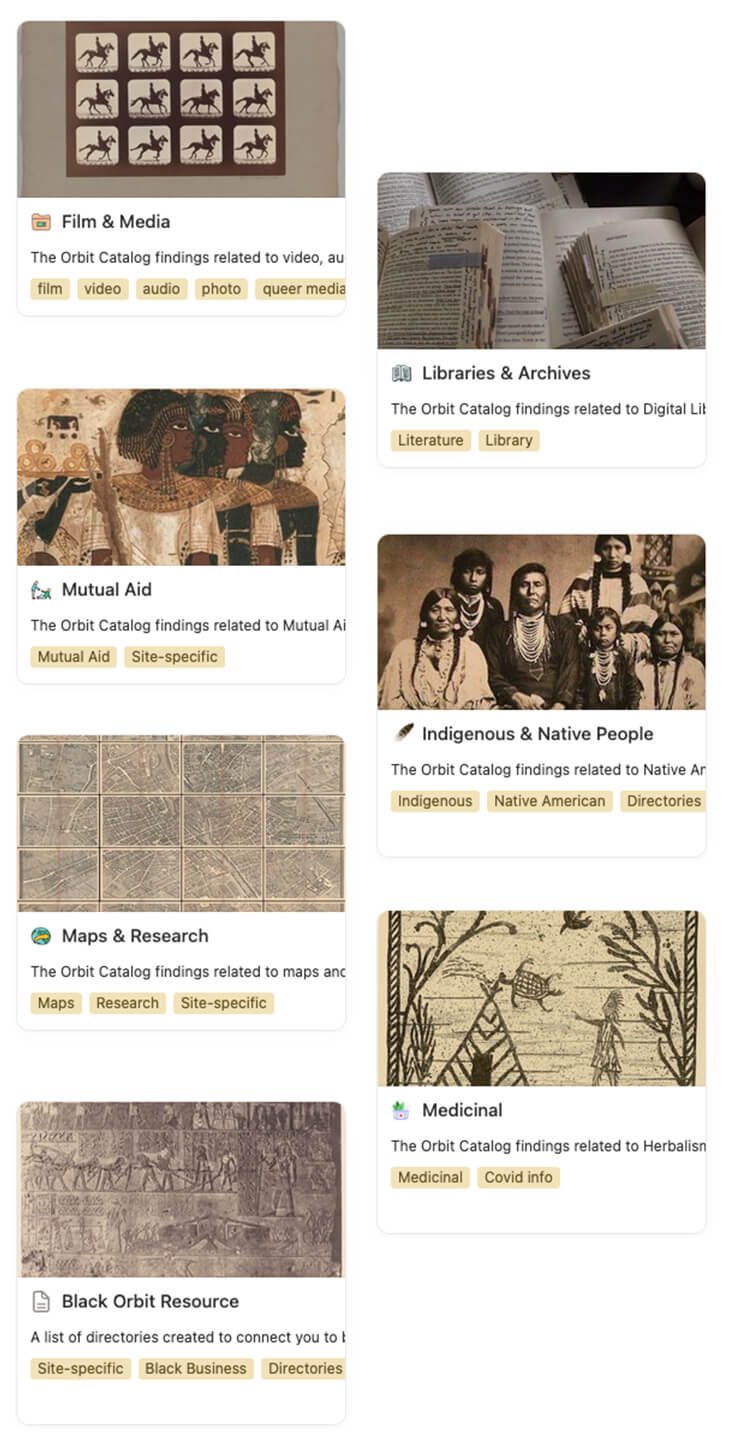
WHAT IS THE BLACK ORBIT?
The Black Orbit is my response to that search. It’s a vision of a curated digital archive and eventual search engine designed specifically for the LGBTQIA+ community, especially Black, Indigenous, disabled, and working-class folks to see themselves reflected, resourced, and remembered.
It’s a tool for navigating media, history, and culture outside of the echo chambers and popularity contests of Instagram and TikTok. It’s a rejection of the algorithm in favor of intention, context, and care.
Going to university during the 2016 election marked a turning point, not just politically, but in how I understood media, truth, and power, and how I intended to influence the landscape. I watched and studied the very real reconstruction of journalism unfolding in the rise of misinformation, the collapse of nuance, and the way queer voices, especially lesbian ones, were either erased or exploited. I knew then, a platform rooted in care, context, and self-explorative research would be most exciting for me to actualize, beyond writing, photography, or building an app.
The Black Orbit is still growing. Still dreaming. But it’s no longer just a concept. It is, in my biased opinion, a necessary tool for the future of queer media and a love letter to the past feminist newsletter wave, to the underground, and to all of us searching for ourselves in the tapestry of memory outside of the Google and Meta monopoly on the Internet space.
This database is about building a resource, a counterforce to the digital void created by shadowbanning and the now “dead-internet” theory.
This archive is designed to help us map our own constellations of power one oral history, zine, mixtape, or photograph at a time. It invites us to research our own ancestral technologies, our own matriarchs of media, our own personal and political awakenings. Not just to document where we’ve been, but to illuminate where we’re going while safeguarding them together.

The Black Orbit is an act of reclamation, and I believe this work has never been more necessary. As we witness a renewed interest in archives, research, and libraries amid mounting threats to the humanities, the urgency of preservation becomes clear. Under rising authoritarian influence, we are again seeing the erasure, distortion, and rewriting of history by systems built on patriarchal control bent on homogeneity.
The Black Orbit is here to remind us that our stories have never been peripheral; they’ve only been scattered across spaces bent on erasure, and now, we gather them. We link them. We let them guide our search.
Because when we know where to look and when we have each other to discover with, the future doesn’t feel so bleak. But perhaps it becomes an orbital refuge, creating nodes for the future.
WHAT’S NEXT FOR THE BLACK ORBIT?
In the next phase of The Black Orbit, I am gathering a team to develop a platform that will act not only as a digital archive but as a living, breathing directory for creators, researchers, and cultural workers at the margins. This means carving out space for women, especially those whose work is systemically underrepresented or intentionally erased, to store, share, and be found through their mediums of creation.
This platform will spotlight writers, journalists, oral historians, documentarians, herbalists, healers, artists, doulas, contractors, educators, and memory-keepers. It will hold the poems, essays, maps, syllabi, film reels, podcasts, soundbites, and stories they make, offering a central site for our work to be seen, cited, and celebrated. Not just as content, but as evidence of survival and imagination. As memory made tangible in this ever-evolving and quickening digital landscape.
In building this directory, I’m pulling from a long tradition of women who labored, often in obscurity or under threat, when documenting the truth. Women who snuck newspapers past checkpoints, published banned literature, and ran underground presses from their kitchen tables.
Women who stitched resistance into every quilt, page, every broadcast, every hand-folded pamphlet. I think of the journalists who refused to soften the story. Writers who hid their names. The mothers, aunties, and chosen kin who passed knowledge mouth-to-ear, hand-to-hand, so that their survival persisted.
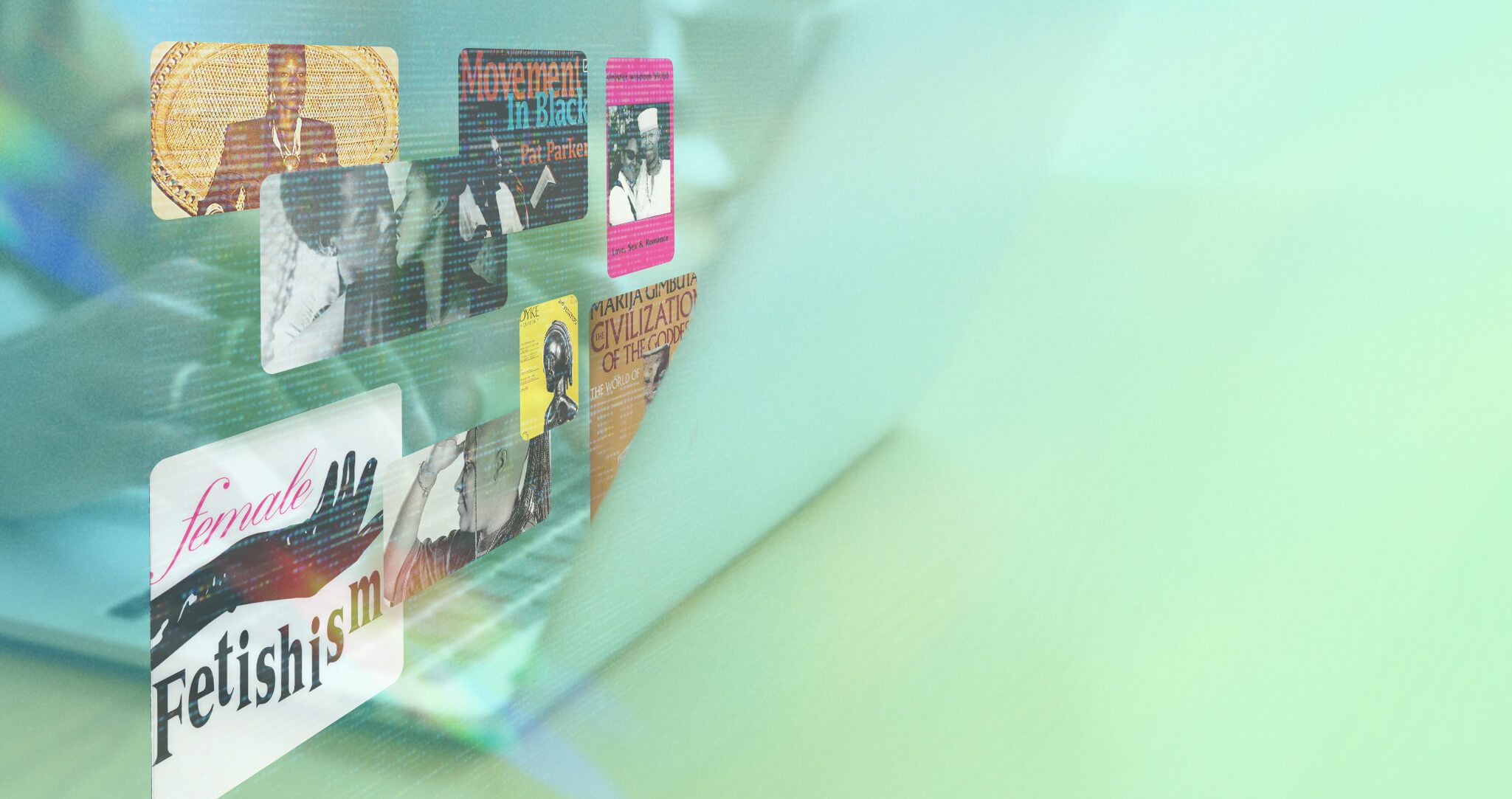
The clipping from Feminist BookStore News (FNB) (Volume 7, Issue 2, 1983). Unearthed during my Descriptive Database Cataloging Internship with Sinister Wisdom- describes a feminist bibliographic project as “a database, [as] the library of the future” and a “primary way of accessing information in the well before women are ready for it” (27). I find this statement to deeply resonate with my work on The Black Orbit. It affirms my intuition: the desire for a searchable, community-centered database that uplifts marginalized knowledge and sapphic media has been simmering for decades, waiting for a platform to carry it forward. This is the lineage of The Black Orbit.
A DIRECTORY FOR THE KIN OF STRUGGLE
This directory will be rooted in accessibility, relationship, and continuity. It won’t just be a showcase; it will be an infrastructure. I want women to find each other here. To collaborate, to resource, to weave across borders and disciplines. I want to build the scaffolding for our creativity to thrive without exploitation and ads, to grow outside of academia, outside of capitalism, outside of white supremacy.
Every submission will be cared for with curatorial intention, indexed not just by genre, but by purpose, lineage, and audience. Who is this for? What does it resist? What does it remember? What does it make possible?
The Black Orbit wants to bring us back to the practice of deep research, not just in the academic sense but in the personal, embodied way our elders practiced it. The kind of research done through conversation, storytelling, kitchen-table wisdom, quiet afternoons in dusty attics or basements. We pass knowledge not just through citations, but through memory, trust, and time. We remember out loud. We build through remembering.
This platform is not just about information. It’s about intimacy. It’s about getting lost in each other as women who love women, in all our vastness, queerness, brashness, grief, tenderness, and sacred otherness. It’s about wandering through each other’s timelines, songs, heartbreaks, epiphanies, and revolutions. It’s about reclaiming the right to study one another with care.
In a world where so much is designed to disappear us, this platform will be in reverence to our persistence.
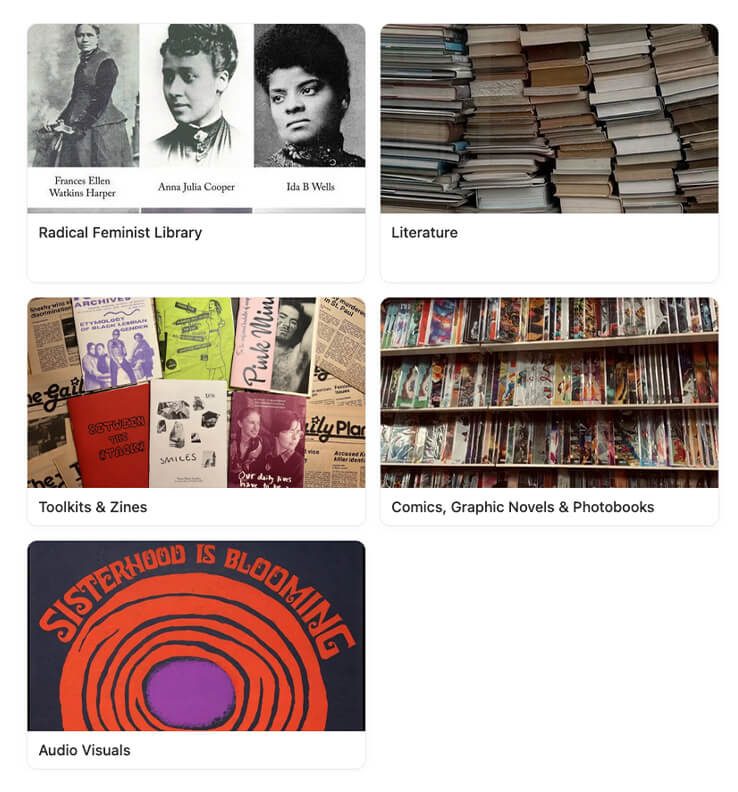
BEYOND THE ALGORITHM AND TOWARD
EACH OTHER
This is not a project of nostalgia, it’s a practice of future-building. The Black Orbit dares to imagine a digital world that prioritizes depth over noise, lineage over trend, and connection over competition.
It is a refusal to let our labor be buried under hashtags or lost to deleted accounts. It is a home for those who’ve been writing, painting, organizing, and surviving in the shadows. It is a place to be found and to find one another.
And maybe most importantly, The Black Orbit is a site of joy. A reminder that even in the face of erasure, we have always created beauty. We have always made a way. We have always reached for each other across distance, across silence, across time. And now, we are building something that allows us to stay in orbit with each other, and for each other.
This project thrives on collective memory, curiosity, and care. If you have a zine, a resource list, a PDF, a video, an oral history, an archived post, or even a single link that you think belongs in a wider orbit, please share it. Head to the “Contribute” tab (visible on desktop view) or email me directly to submit materials that could expand our catalog. Your offering, no matter how nuanced, might be exactly what someone else has been looking for. Together, we can deepen this digital archive as a living resource for all who love women past, present, and still to come.
Visit The Black Orbit Database here.
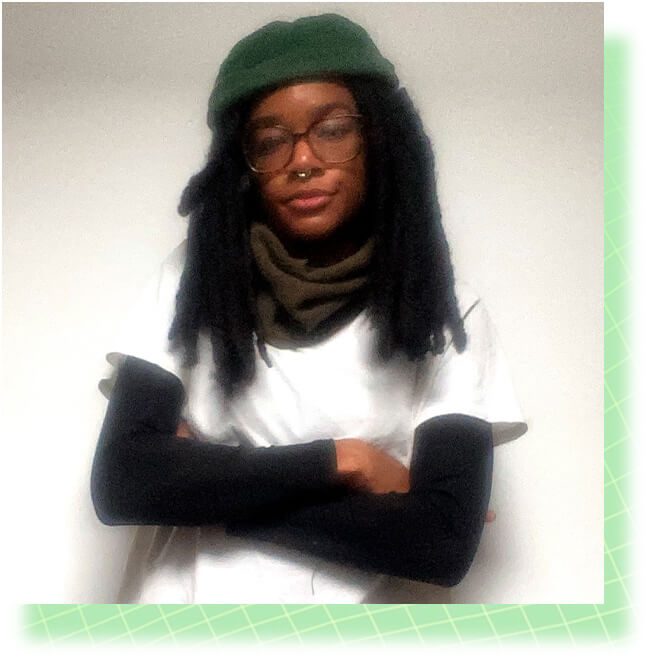
ABOUT THE AUTHOR
Mel Oliver (they/them) is an Afro-Indigenous lesbian, oracle poet, educator, and multidisciplinary artist whose work honors their mixed lineage through image, language, and digital ritual. Anchored in the belief that preservation is resistance, Mel creates film photographs, crafts, and web-based constellations that explore queerness, land memory, grief, and collective care, inviting viewers to see learning as a form of healing and connection.
Follow Mel on Iinstagram: @theblackorbitcatalog and @meloliverr__ and visit her at Melsorbit.carrd.co. To submit a contribution, email: [email protected].